Decisions sit unresolved
Business, procurement, technology, and partner teams wait because ownership or the escalation route is unclear.
We clear decision bottlenecks, reset delivery priorities, prepare UAT and cutover, align software partners, and rebuild adoption across intake, sourcing, contracts, supplier management, and procure-to-pay.

We enter at a specific delivery problem, establish the facts, and turn open issues into owned work.
Business, procurement, technology, and partner teams wait because ownership or the escalation route is unclear.
Requests, defects, design choices, and change items compete without a shared priority or named owner.
Acceptance criteria, business scenarios, data, and reviewers are not ready when UAT or release decisions begin.
Intake, approvals, buying channels, supplier steps, or reporting do not match how the work happens.
Vendor and systems-integrator actions remain open because handoffs, evidence, and due dates are not explicit.
Teams resolve incidents case by case without fixing ownership, process, data, training, or release routines.
The engagement connects diagnosis to delivery actions, business acceptance, and day-to-day ownership.
Review process data, tickets, backlog, decisions, adoption, test evidence, and partner actions. Identify the few failure points that block delivery or business use.
Prioritize the backlog, assign decision owners, apply Process Improvement to priority gaps, align partners, and set the UAT, cutover, release, and escalation routine.
Put measures, review meetings, support routes, training, and continuous-improvement ownership into the teams that will run the process.
Scope determines the final set. Every output has an owner and a role in delivery, acceptance, or ongoing operations.
Business value, risk, dependency, owner, and due date for each item.
Named decision owners, escalation routes, open actions, and recorded outcomes.
Working steps, roles, evidence, exceptions, approvals, and system handoffs.
Business scenarios, test data, reviewers, exit criteria, and defect triage.
Readiness checks, dependencies, owners, fallback actions, and sign-off evidence.
Clear commitments, handoffs, evidence requests, dependencies, and due dates.
Audience, training, communications, local ownership, and issue routes.
Baseline, measures, review cadence, issue owners, and improvement actions.
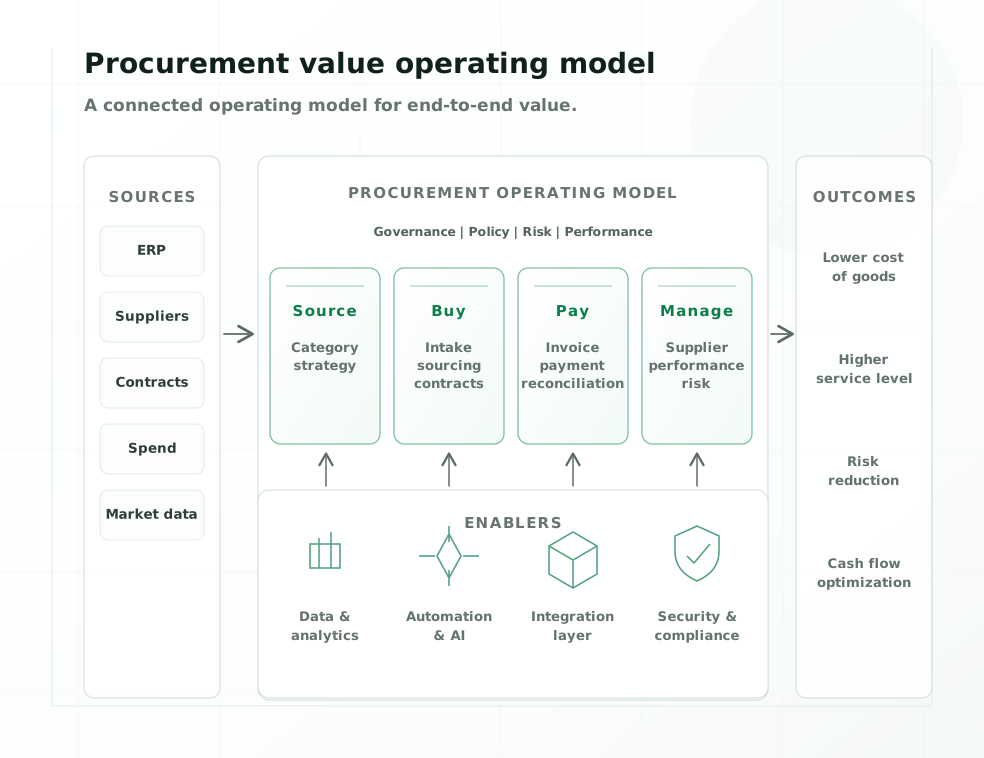
Procurement change works when process, data, systems, people, and supplier activity meet in one practical delivery model.
Where the work applies
When a workflow has clear sources, rules, owners, approval points, and acceptance measures, we can assess it for agent deployment. Procurement transformation does not depend on that choice.