Procurement & Supply Chain
6–10 weeks

Intake-to-Procure Stabilization (Post Go‑Live)

A procurement transformation had gone live, but the “front door” was losing trust. Stakeholders reverted to email and workarounds, the backlog became noisy, and escalations replaced governance. We stabilised delivery, clarified decision rights, and rebuilt adoption with a calm, weekly operating rhythm.

#Intake-to-procure
#Adoption
#Operating model
#UAT
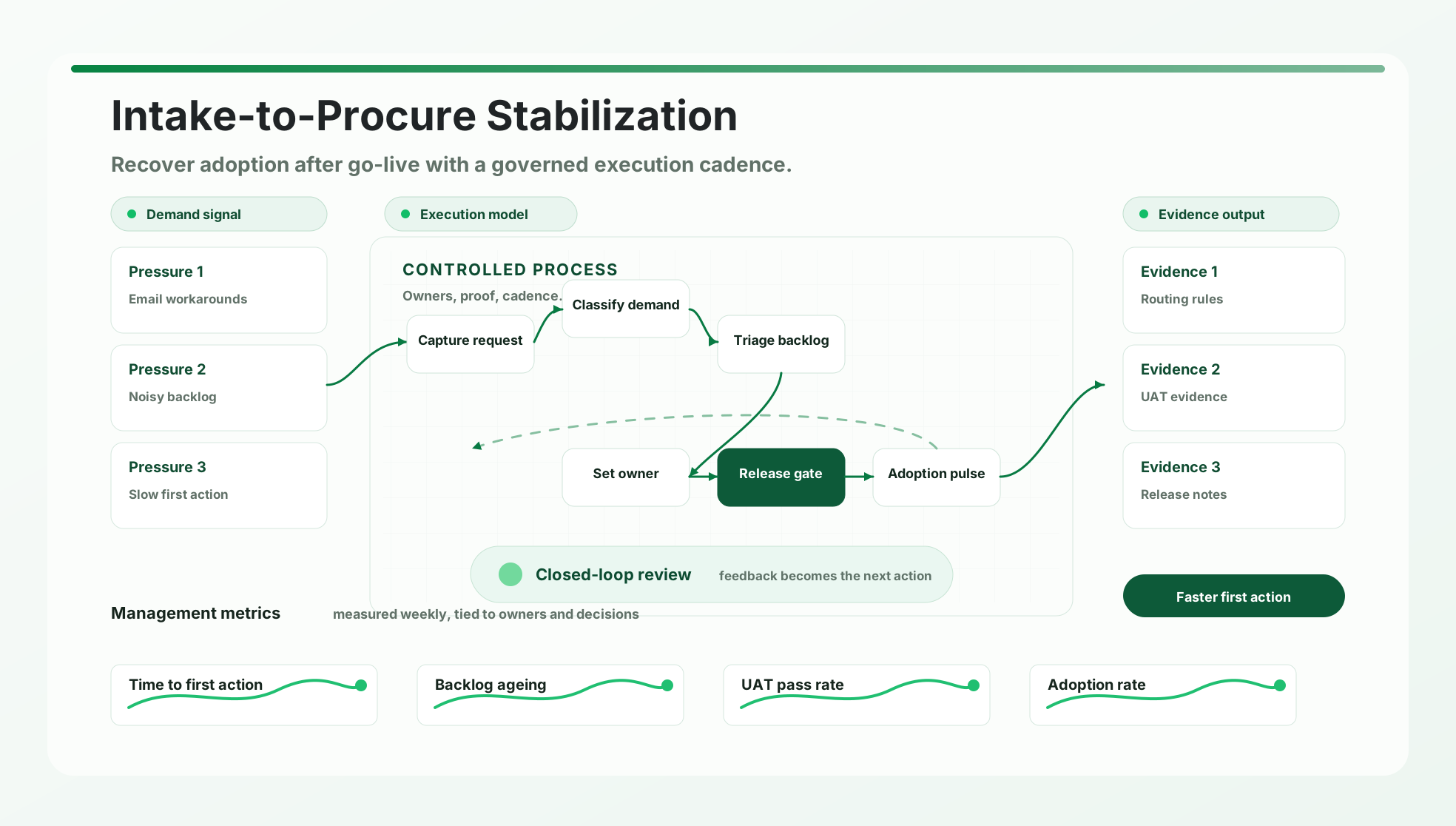
Intake-to-procure stabilisation: restore adoption and control
Anonymised case study. Focus: turning a fragile go-live into a predictable operating rhythm.

Problem

  • Low confidence post go-live: users avoided the intake path and fell back to email/Teams
  • Backlog chaos: production issues mixed with enhancements, with no visible prioritisation logic
  • Conflicting expectations and unclear decision rights (everyone escalates, no one decides)
  • Operational noise: vendor/SI overhead, unclear ownership, slow follow-up, weak reporting
  • Adoption friction: the “right path” felt slower than the workaround path

Approach

  • Reset the operating model: RACI, decision rights, and a steering cadence leadership could trust
  • Create a single backlog truth: triage rules, severity definitions, and a decision workflow to unblock delivery
  • Separate “stabilise now” work from structural fixes, then sequence it into controlled releases with UAT gates
  • Rebuild adoption from the user’s point of view (simplify intake paths, clarify what happens next, shorten feedback loops)
  • Use human-in-the-loop accelerators (LLMs/agents) to reduce admin load (triage summaries, release notes, comms drafts)

Deliverables

  • A clear backlog model (triage rules, prioritisation criteria, owners, and release cadence)
  • A UAT readiness checklist + defect/decision workflow that reduced late surprises
  • Simplified intake paths + enablement pack (training, comms, and “what good looks like” examples)
  • A weekly KPI pack that drove actions (not slideware) and made progress visible
  • Handover plan into steady state ownership (who owns what after the sprint)

Outcomes

  • Reduced workarounds and restored confidence in the intake path
  • More predictable releases and fewer production escalations
  • Clearer ownership, faster decisions, and a calmer operating rhythm
  • A stable baseline to scale improvements (rather than firefighting)

KPIs we tracked

  • Intake adoption rate (requests entering via the intended path)
  • Time-to-first-action (request submitted → work started)
  • Backlog health (ageing, severity mix, and decision throughput)
  • Release quality (defects by stage, UAT pass rate, production incident trend)
  • Escalation volume and root-cause themes

Baseline → target KPIs

These targets are set after baselining in week one. They are designed to reduce workarounds, improve predictability, and restore confidence post go-live.

MetricTypical baselineTarget after stabilisation
Time-to-first-action (request submitted → work started)
Often 3–10 business days (workarounds common)≤2 business days for priority request types
Backlog health (ageing of high-severity items)
High-severity items ageing >2–4 weeksNo high-severity items ageing >5–10 business days
Release predictability
Ad hoc releases; UAT late; frequent “surprises”Fixed cadence with UAT gates and clear go/no-go criteria

Frameworks and artefacts

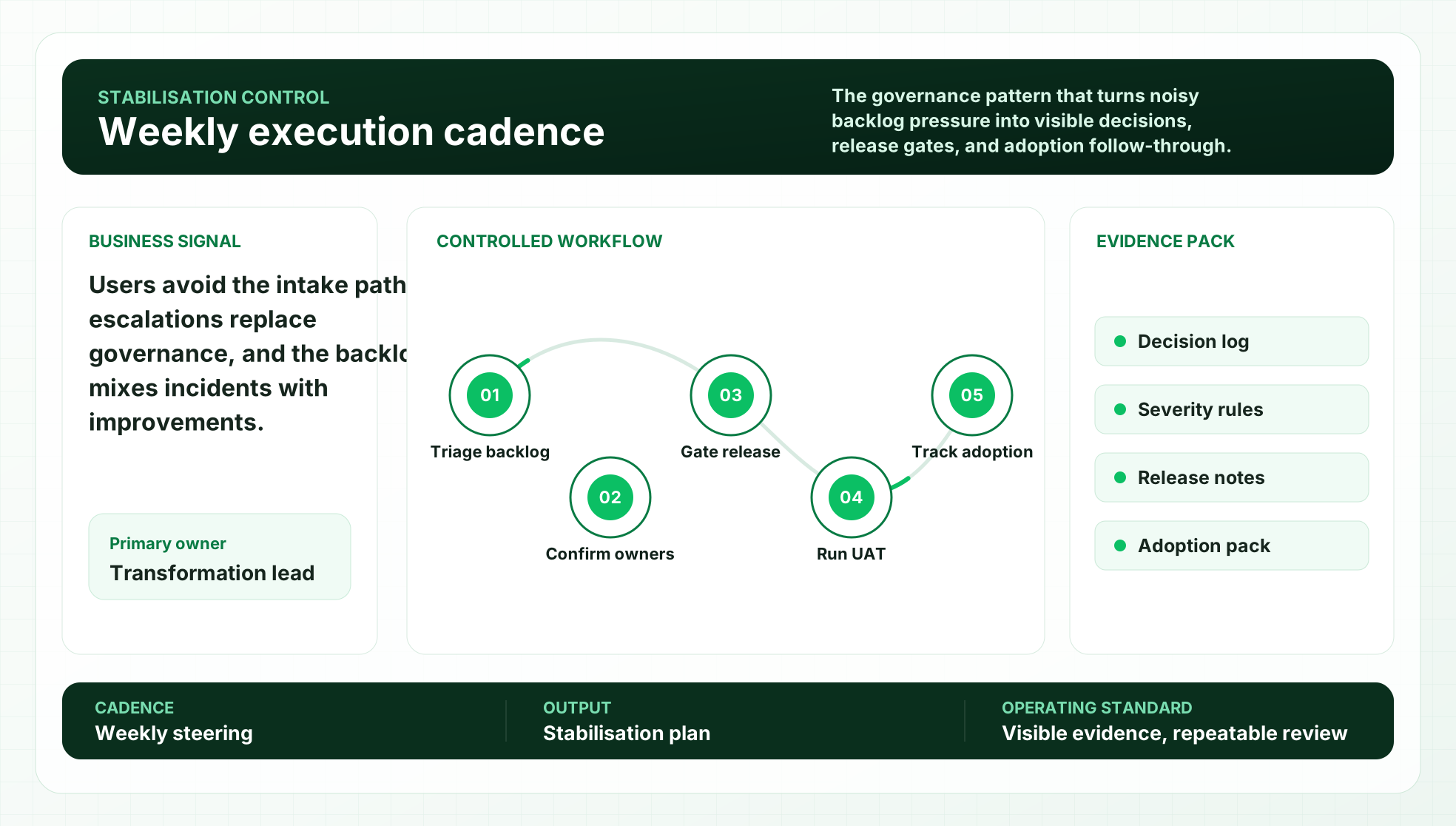
The stabilisation operating rhythm

A simple weekly cadence that restores trust: triage, decisions, release gates, and comms, with explicit ownership and evidence.

Operating rhythm diagram: triage, decisions, releases, and adoption
The goal is not more meetings. It is fewer surprises and faster decisions.

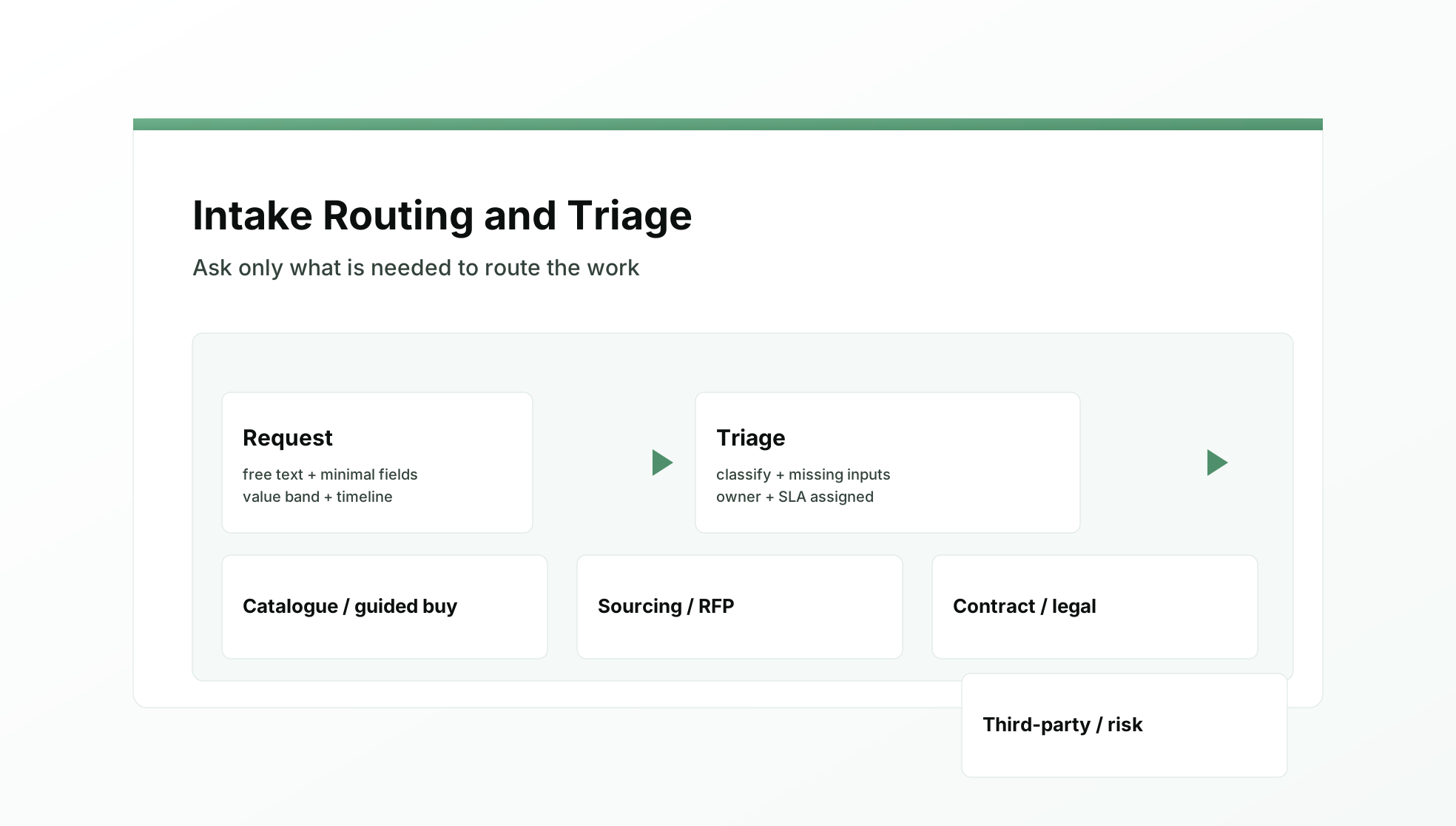
Intake routing and triage (the front door)

We reduce workarounds by making routing predictable. Free text becomes structured, then gets routed into the right path with clear SLAs.

Routing and triage diagram for intake-to-procure
Designed for speed: ask only what is needed to route the work.

Timeline

6–10 weeks

  • Week 1: Align stakeholders, baseline KPIs, establish decision rights and a weekly steering rhythm
  • Weeks 2–3: Triage the backlog (stabilize now vs structural fixes) and stop the most painful workarounds
  • Weeks 4–6: Implement fixes, tighten controls, and run a predictable release + UAT cadence
  • Weeks 7–10: Strengthen adoption, reporting, and handover into steady-state ownership