Spend is an incomplete risk proxy
Low-spend services can carry material privacy, continuity or regulatory exposure.
Management decisionSet tiering rules across access, criticality, location and regulation alongside spend.
Supplier onboarding and due diligence were inconsistent and slow. Teams over-checked low-risk suppliers, under-checked high-risk suppliers and stored evidence across email, folders and spreadsheets. We defined risk tiers, evidence standards, approval ownership and bounded automation for evidence collection and follow-up.
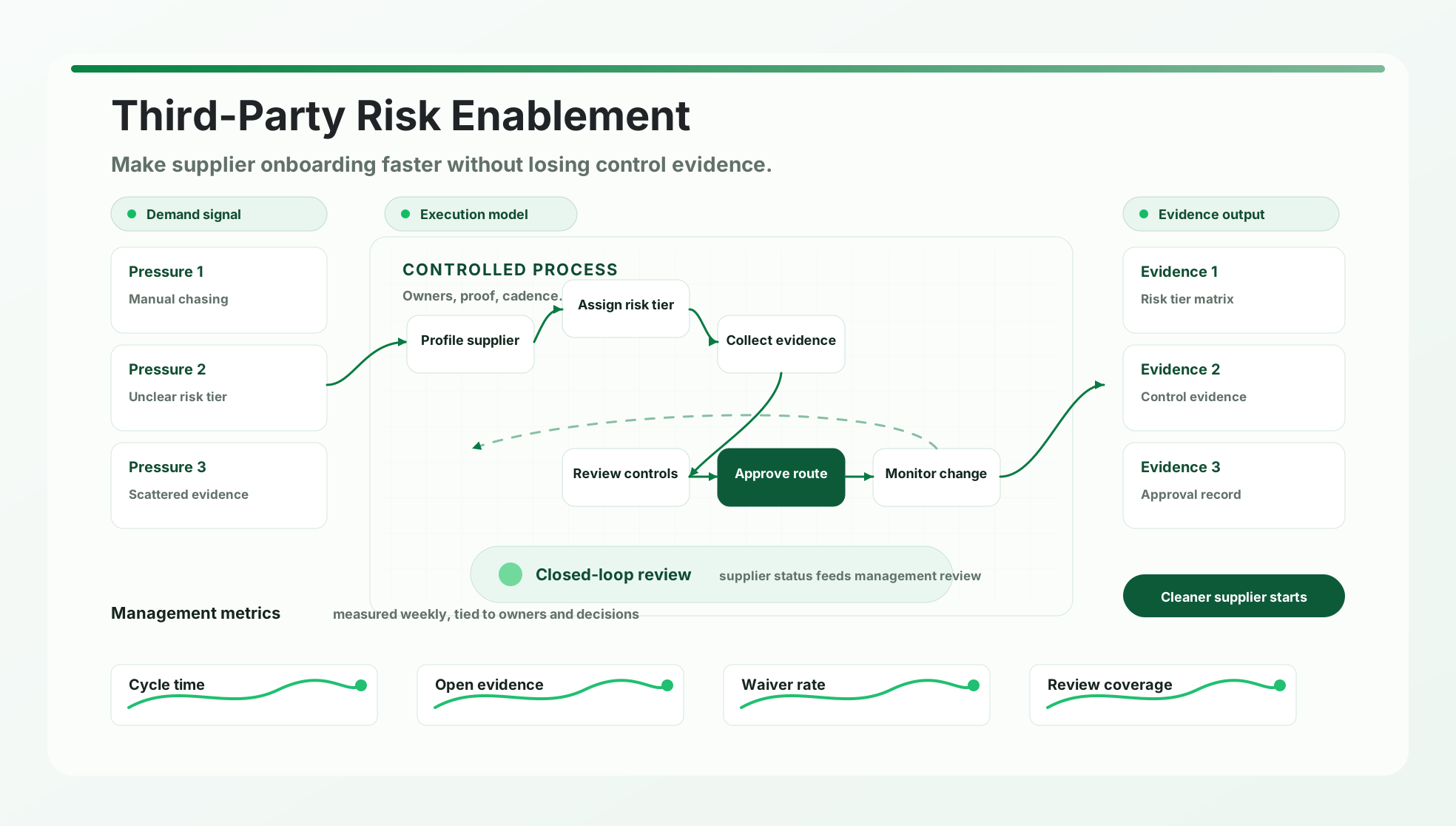
Anonymised case study. Focus: faster onboarding with clearer tiering and evidence standards.
Classify exposure once, request the evidence required for that tier, and retain the approval, conditions and review trigger in one record.
Service, location, data and dependency
Low, medium or high review path
Controls, resilience and compliance
Approve, mitigate, waive or reject
Expiry, incident or material change
Each finding connects an observed business signal to a decision, owner or allocation choice.
Low-spend services can carry material privacy, continuity or regulatory exposure.
Repeated requests and missing evidence create more delay than the approval itself.
Open-ended exceptions weaken the control environment and obscure residual exposure.
Anonymised working assets used to define decisions, configure the workflow and transfer ownership into operations.
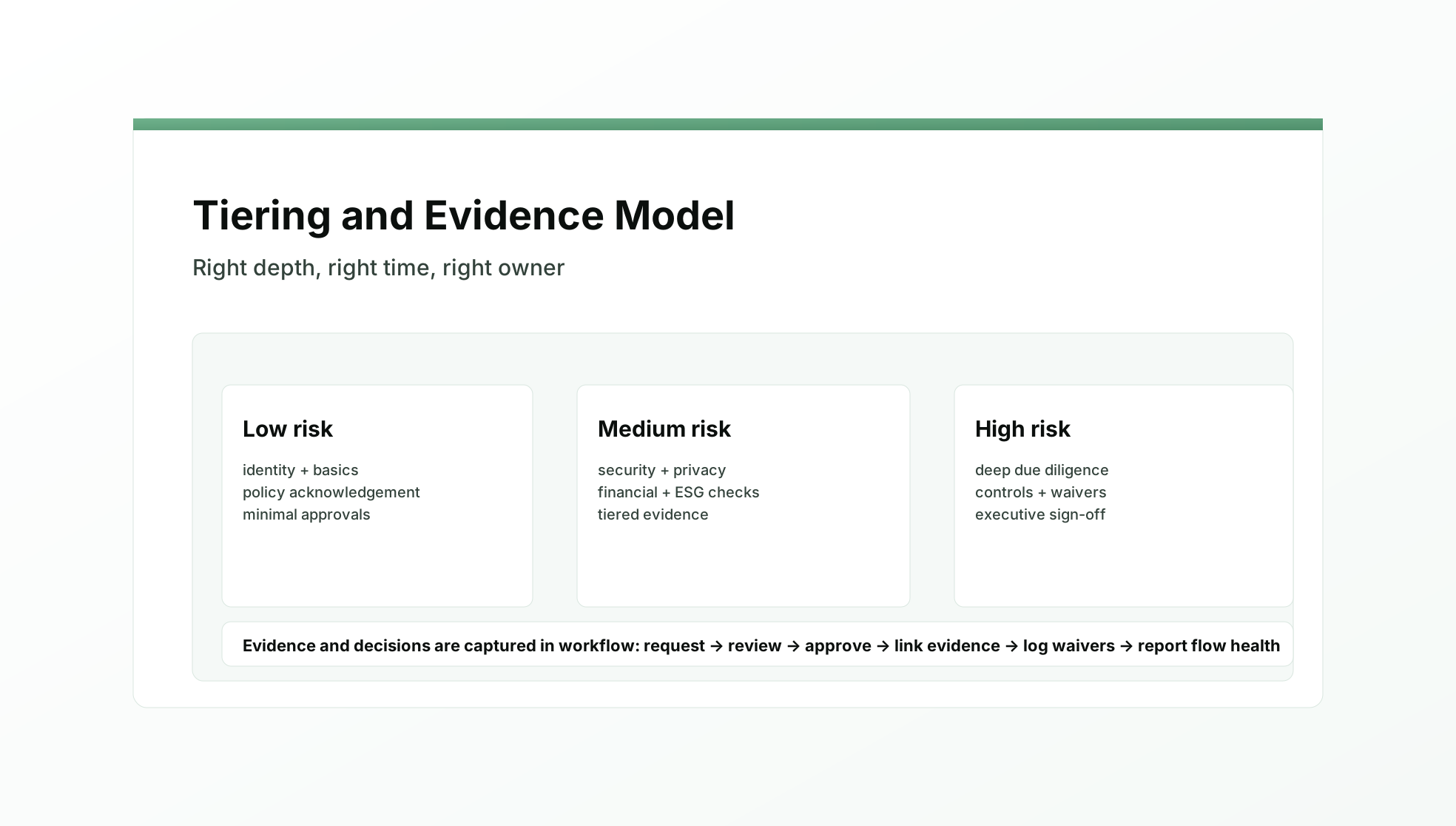
A small number of risk tiers sets the evidence requirements, owners, approval routes, and exception paths for each supplier type.
Tiering prevents over-checking low risk suppliers and under-checking high risk ones.
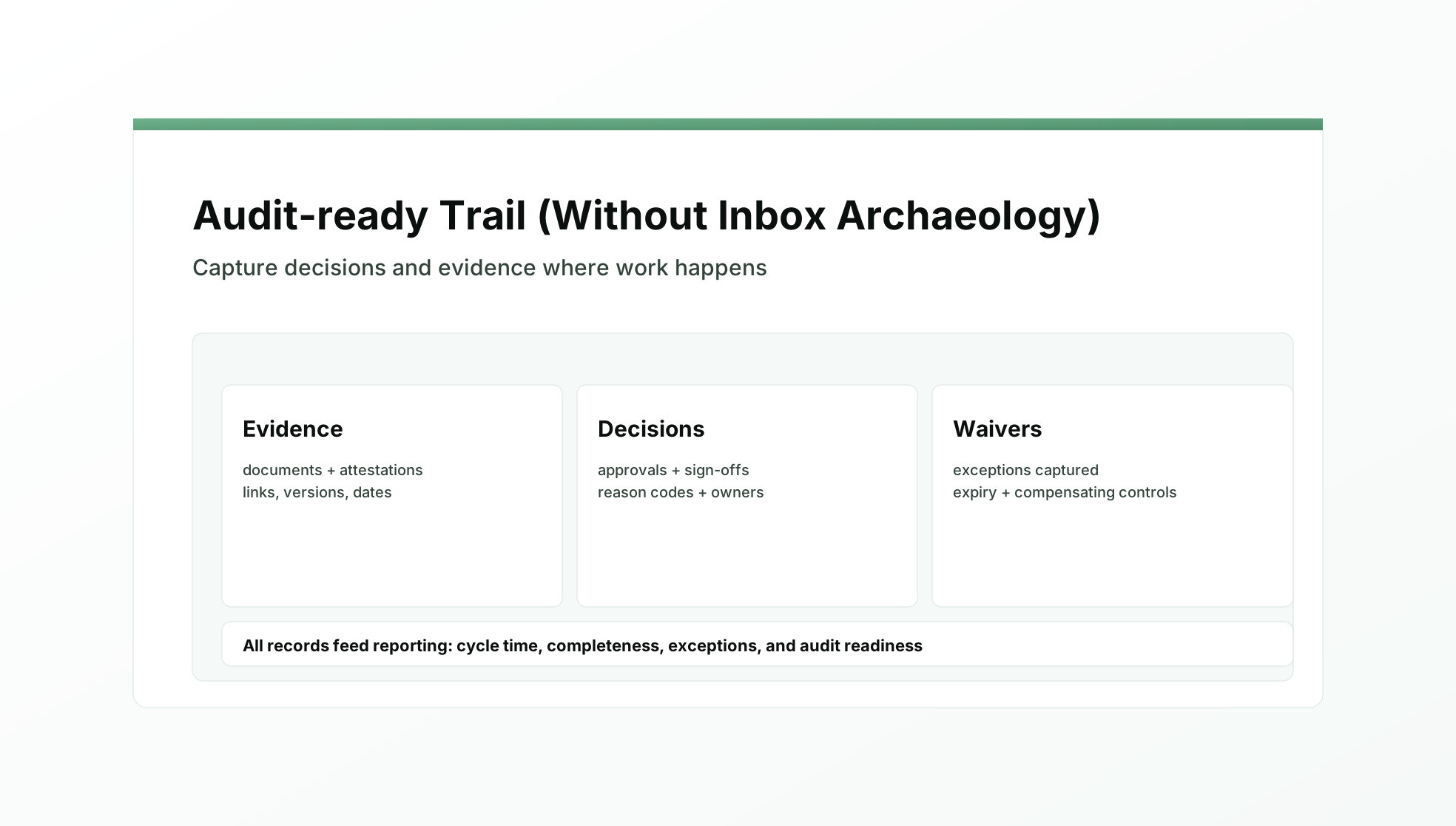
The workflow retains decision logs, evidence links, waiver owners and expiry dates in one reviewable record.
Decision logs, evidence links, waiver ownership, and flow-health measures make each approval reviewable.
In regulated environments, tiered evidence and named approval owners protect defensibility while keeping low-risk onboarding proportionate.
Baselines and targets are operating ranges used to frame discovery and acceptance. They are not presented as verified client results.
2–3 weeks (assessment) + 6–10 weeks (delivery)
Assessment (2–3 weeks): Tiering model, evidence requirements, approval checkpoints, and current pain points
Delivery (Weeks 1–3): Standardize onboarding playbooks, checkpoints, and escalation paths
Delivery (Weeks 4–6): Implement automation patterns (LLMs/agents) with human review guardrails
Delivery (Weeks 7–10): Reporting cadence, auditability checks, and steady-state ownership
Continue into the service page tied to this example, or compare the wider advisory offer.