Define the market, buyer, and reason to change
ICP fit alone says nothing about the buying system, differentiation, proof burden or viable route to market.
Management decisionAgree the market thesis and commercial economics before adding coverage.
A SaaS editor had strong product capability, but broad positioning and account lists weakened timing and qualification. We defined valid signal hypotheses for priority ICP wedges, introduced agent-assisted source research and action preparation, mapped proof to the buying constraint, and established human approval plus weekly review of conversion and rejection reasons.
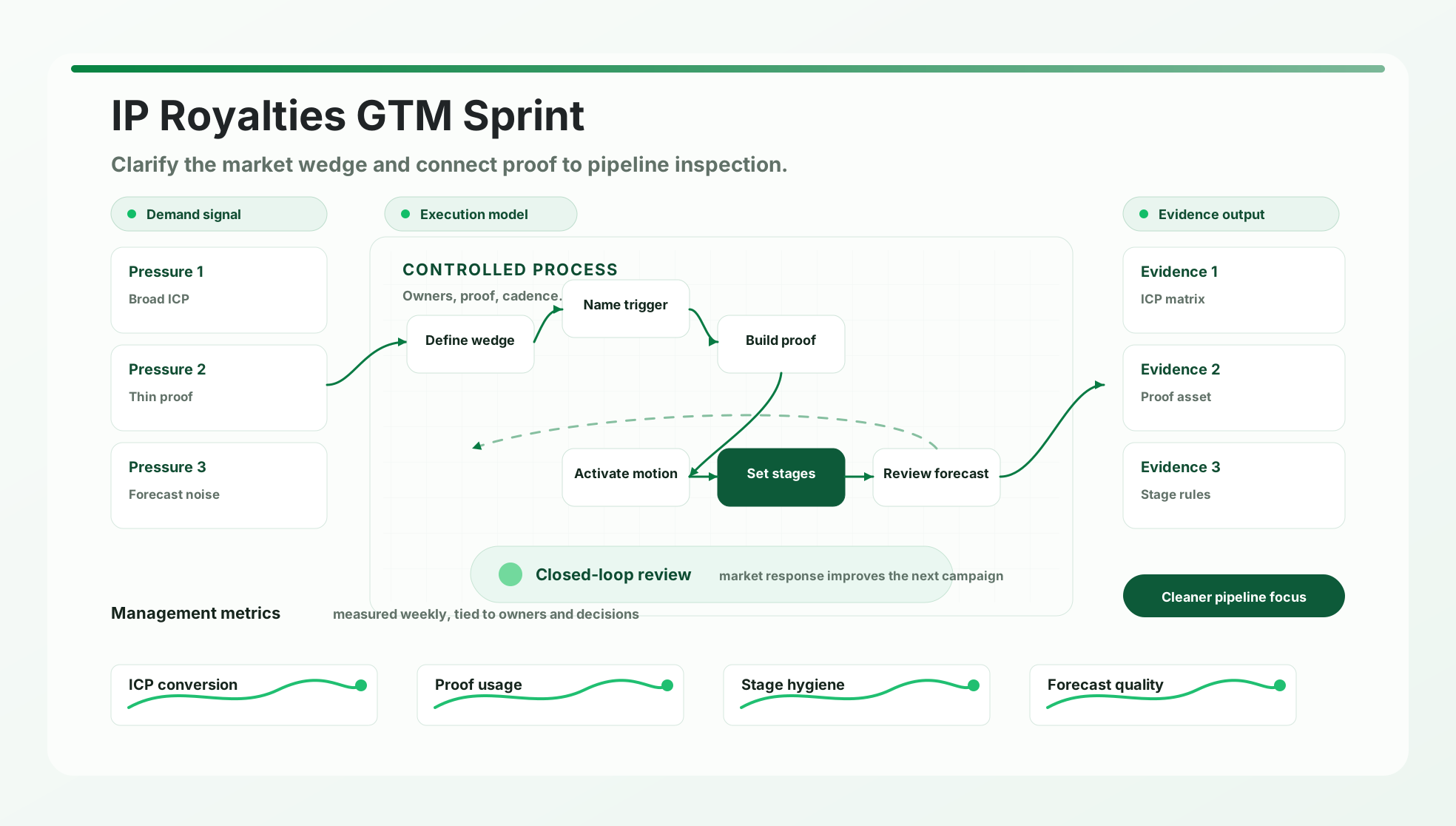
Anonymised case study. Focus: ICP wedges, switching triggers, proof coverage and opportunity evidence.
Agree where to compete and why buyers should change; connect ICP fit to sourced timing; implement agent-assisted preparation; and train the team that retains commercial accountability.
Source, recency and buying implication
Constraint, owner, timing and priority
Verified source, proof and proposed next action
Accept, edit, reject or suppress
Conversion, rejection and decision age
Each finding connects an observed business signal to a decision, owner or allocation choice.
ICP fit alone says nothing about the buying system, differentiation, proof burden or viable route to market.
Research and drafts become more persuasive only when the source and buying context are sound.
Missing next decisions and inconsistent stages prevent reliable resource allocation and forecasting.
Anonymised working assets used to define decisions, configure the workflow and transfer ownership into operations.
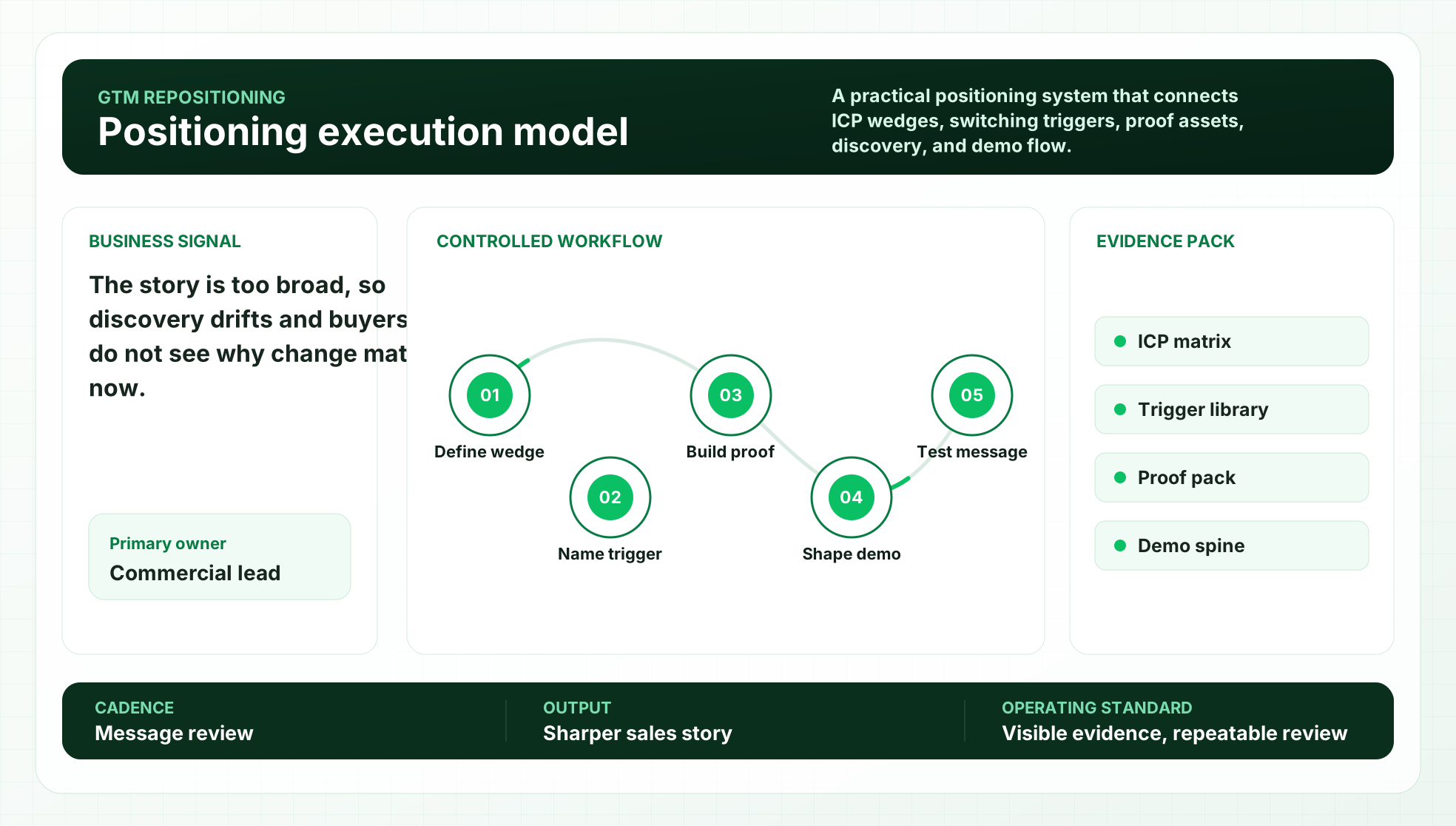
A positioning system that connects ICP wedges and switching triggers to proof assets, discovery, and demo flow.
Each ICP wedge carries the same buyer problem and proof logic through positioning, discovery, and demo flow.
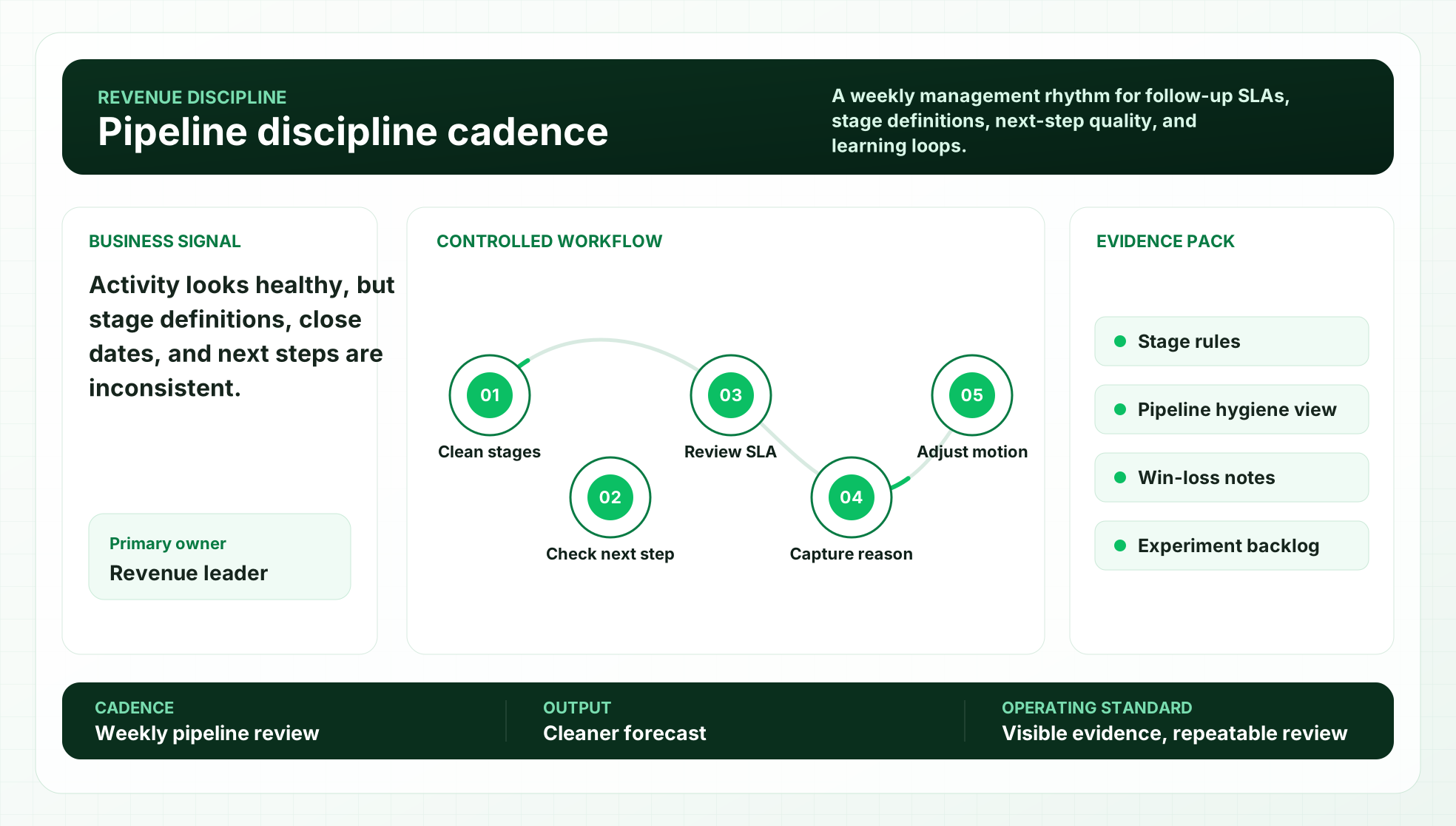
A weekly management rhythm for follow-up SLAs, stage definitions, next-step quality, and learning loops.
Pipeline hygiene improves when the review rhythm focuses on decision quality and treats activity volume as context.
These standards make positioning and qualification inspectable by segment. Thresholds are set after the first pipeline baseline.
Baselines and targets are operating ranges used to frame discovery and acceptance. They are not presented as verified client results.
6–8 weeks
Week 1: Diagnose ICP, valid signal hypotheses, source quality, proof gaps, and pipeline baseline
Weeks 2–3: Configure agent-assisted research and preparation; ship proof, talk track, and approval rules
Weeks 4–6: Run signal-led event and outbound motions with human approval and weekly conversion review
Weeks 7–8: Retire weak signals, refine the motion, and transfer the weekly review cycle
Continue into the service page tied to this example, or compare the wider advisory offer.