Music Publishing Royalties: Sell Traceability, Reconciliation, and Exception Control
A GTM point of view for royalty platforms: use verified close, dispute, and lineage problems to build a finance-grade buying case.
Explain each number before you scale the process
Connect a traceability failure to the buyer who owns the consequence
Reconciliation and dispute evidence creates a stronger commercial signal than a broad claim about data quality.
- 01 · SignalDetect
Observe a time-bound change or behaviour
- 02 · EvidenceVerify
Confirm source, recency and account relevance
- 03 · ContextQualify
Map the buying constraint, role and timing
- 04 · Agent workPrepare
Assemble research, proof and a proposed action
- 05 · GateApprove & learn
Owner approves; CRM records the result
- Weak starting point
- The message promotes reporting and analytics features.
- Commercial decision
- Verify the adjustment and show how source, rule, exception and approval can be traced.
- Acceptance evidence
- Finance and operations can test one number end to end against agreed evidence.
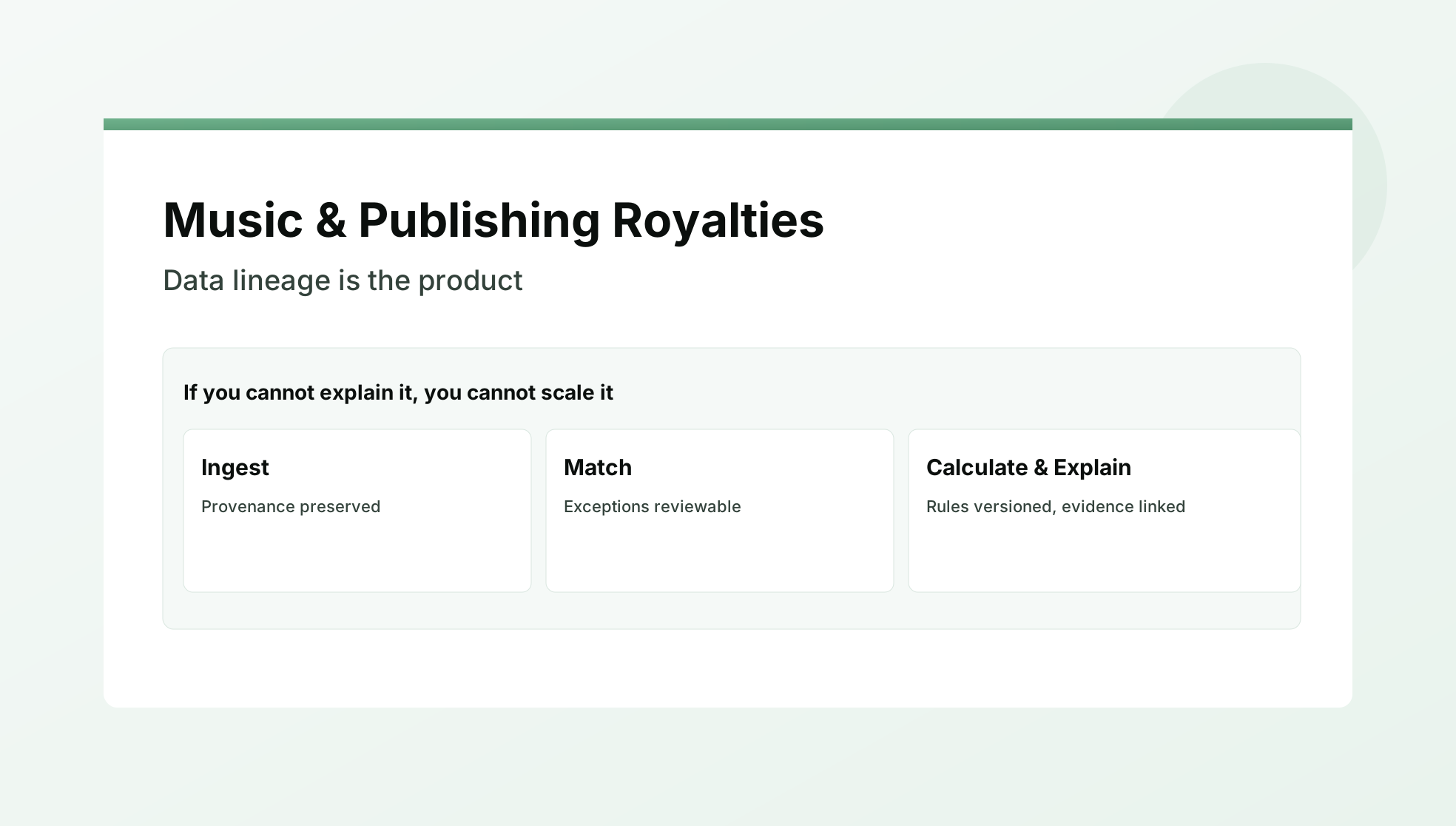
In music and publishing, royalties carry relationships as well as financial value. Delayed or disputed statements cost time and weaken trust with creators, publishers, and partners.
Explainability is a buying criterion. The platform must trace the path from ingestion through matching and calculation in terms finance and operations can verify.
The acceptance test
A royalty platform is judged at the moment of dispute. If the buyer cannot defend a number quickly, they will not trust the system next cycle either.
Where value is created (and where vendors often oversell)
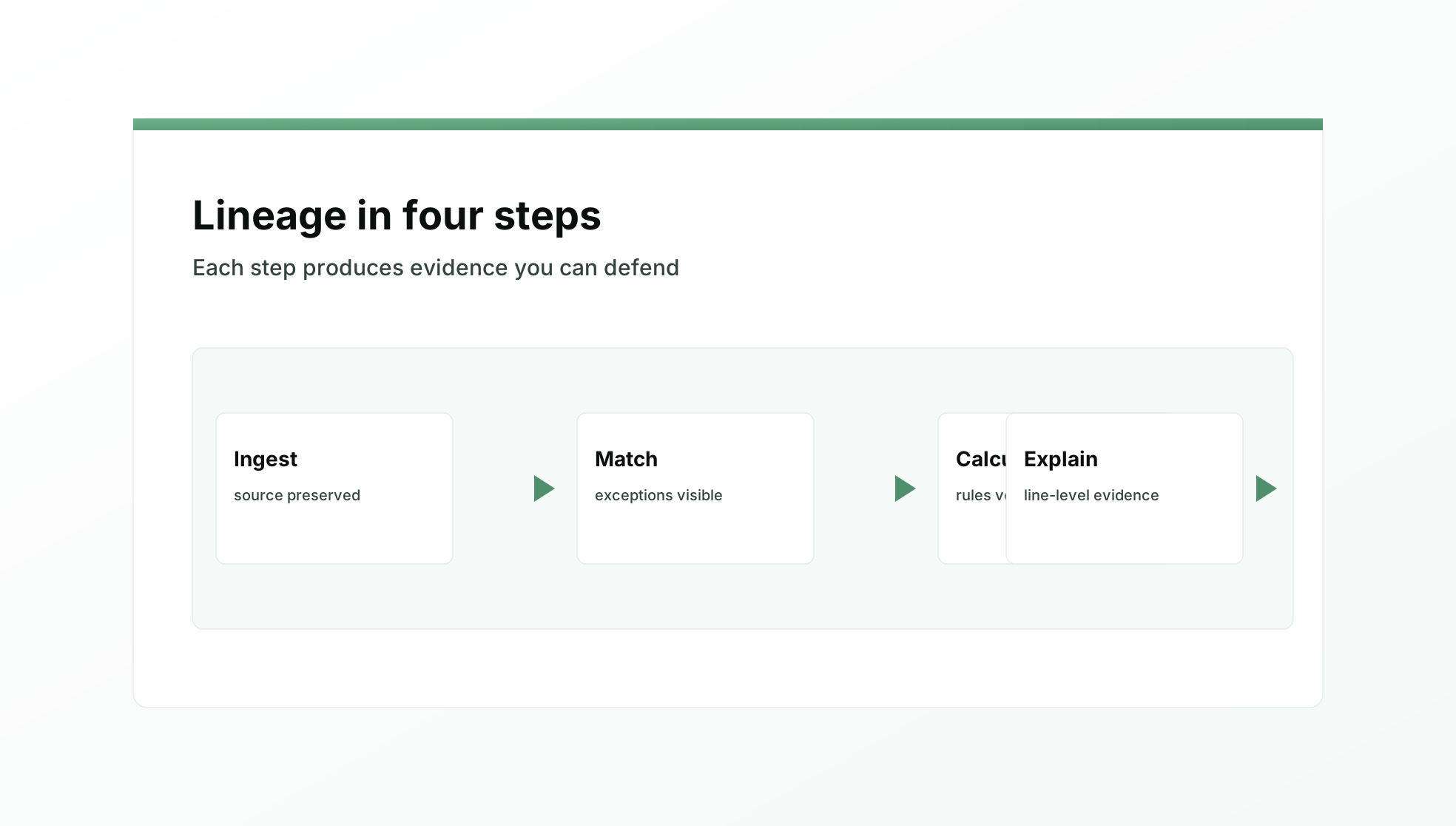
- • Ingestion: handle messy inputs and preserve provenance
- • Matching: predictable logic with exceptions treated as first-class work
- • Calculation: versioned rules, effective dates, and clear overrides
- • Statementing: transparent breakdowns that reduce escalations
- • Dispute handling: line-level evidence packages
If your platform makes exceptions invisible, the business will create a shadow process. If your platform makes exceptions manageable, you become the system of record.
Exception handling is part of the core workflow
Most implementations fail because they treat exceptions as errors to hide. In royalties, exceptions are the work. Buyers want to see a queue, ownership, and a clear path to resolution.
- • An exceptions queue with reason codes and owners
- • A resolution workflow with evidence attached (what changed and why)
- • A learning loop: top reasons reviewed monthly and fixed upstream
A GTM narrative grounded in buyer operations
Music buyers respond to calm, specific, operational proof.
- • Lead with the business pain: shorten statement cycles without sacrificing accuracy
- • Show line-level evidence when explaining how disputes are reduced
- • Be honest about trade-offs: automate the repeatable, make exceptions reviewable
The demo spine (what to show in 15 minutes)
- • Ingest one source file and show provenance preserved
- • Show a match with an exception and how it is resolved
- • Show a calculation rule with versioning and effective dates
- • Show a statement line drilled down to evidence
- • Show a dispute package export (what an auditor would accept)
A bounded reconciliation and lineage scope
Start with a bounded reconciliation and lineage sprint: one catalogue, one partner, and one reporting cycle used to prove traceability end-to-end.
- • Define the minimum data needed and the acceptance tests
- • Run one cycle with parallel run and explain every delta
- • Package the outputs as a reusable playbook and evidence model
Acceptance evidence for the first scope
- • A lineage map: inputs → rules → outputs
- • An exceptions taxonomy and ownership model
- • A close checklist for the next cycle
Use financial evidence to qualify the opportunity
- • Identify the reporting cycle, catalogue, source, or rule change behind the reconciliation problem
- • Quantify the consequence in close delay, manual investigation, dispute exposure, or confidence in statements
- • Map finance, royalty operations, data, and audit roles to the decision they must make
- • Prove one number end to end before asking the buyer to accept a wider transformation case
Related service
Related insights
GTM Signals
Event-to-Pipeline: Convert Valid Signals into Accepted Sales Actions
A signal-led event system for capturing buying context, using agents to prepare evidence-based follow-up, and measuring accepted pipeline conversion.
GTM Signals
Pipeline Discipline: Stage Evidence That Supports Commercial Decisions
Define opportunity stages by buyer evidence, ownership, and the next decision so forecasts, resource choices, and conversion analysis remain credible.
GTM Signals
Agent-Assisted Outreach: Evidence, Approval, and Measured Follow-Through
Combine experienced GTM judgement with AI agents that accelerate signal monitoring, source evidence, account research, and action preparation while people retain commercial and relationship accountability.
Get Procurement Signals | GTM Signals
A lightweight quarterly note with practical playbooks and patterns. No spam.
Procurement Signals | GTM Signals
Practical patterns for procurement delivery, agentic systems, and GTM execution.