Media and Sport Rights: Minimum Guarantees, Forecasting, and Decision Trust
A GTM point of view for rights platforms: convert changes in commitments, windows, and forecasts into evidence-led finance and operations decisions.
Design rights operations for volatility
Translate commercial exposure into an inspectable decision
A minimum-guarantee or rights-window change matters when its financial effect, ownership and decision date are clear.
- 01 · SignalDetect
Observe a time-bound change or behaviour
- 02 · EvidenceVerify
Confirm source, recency and account relevance
- 03 · ContextQualify
Map the buying constraint, role and timing
- 04 · Agent workPrepare
Assemble research, proof and a proposed action
- 05 · GateApprove & learn
Owner approves; CRM records the result
- Weak starting point
- The pitch leads with flexible modelling and dashboard breadth.
- Commercial decision
- Ground the case in commitment exposure, rule versioning and the next finance decision.
- Acceptance evidence
- The buyer can trace the forecast, approve a change and see the downstream effect.
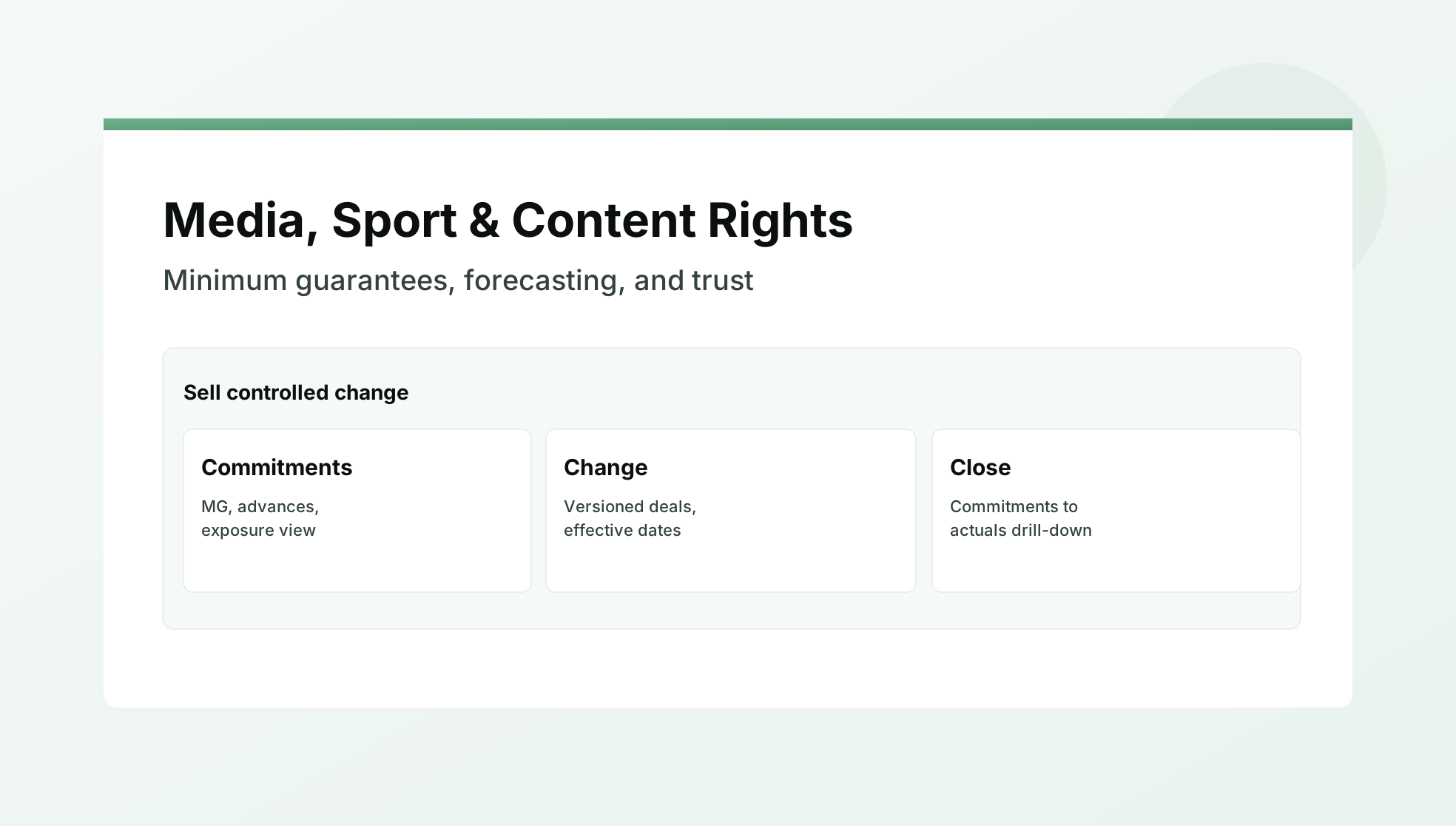
Rights deals rarely behave like a clean spreadsheet. Windows change, packages get renegotiated, territories expand, and channels fragment. Buyers expect a system that handles those changes without hiding them.
Buyers need controlled change. Adjustments must be visible, versioned, approved, and explainable without rewriting prior evidence.
What “controlled change” means in practice
It means versioning, effective dates, approvals, and an audit trail. A buyer should be able to answer: what changed, when, who approved it, and what downstream statements it affected.
Why minimum guarantees shape the buying case
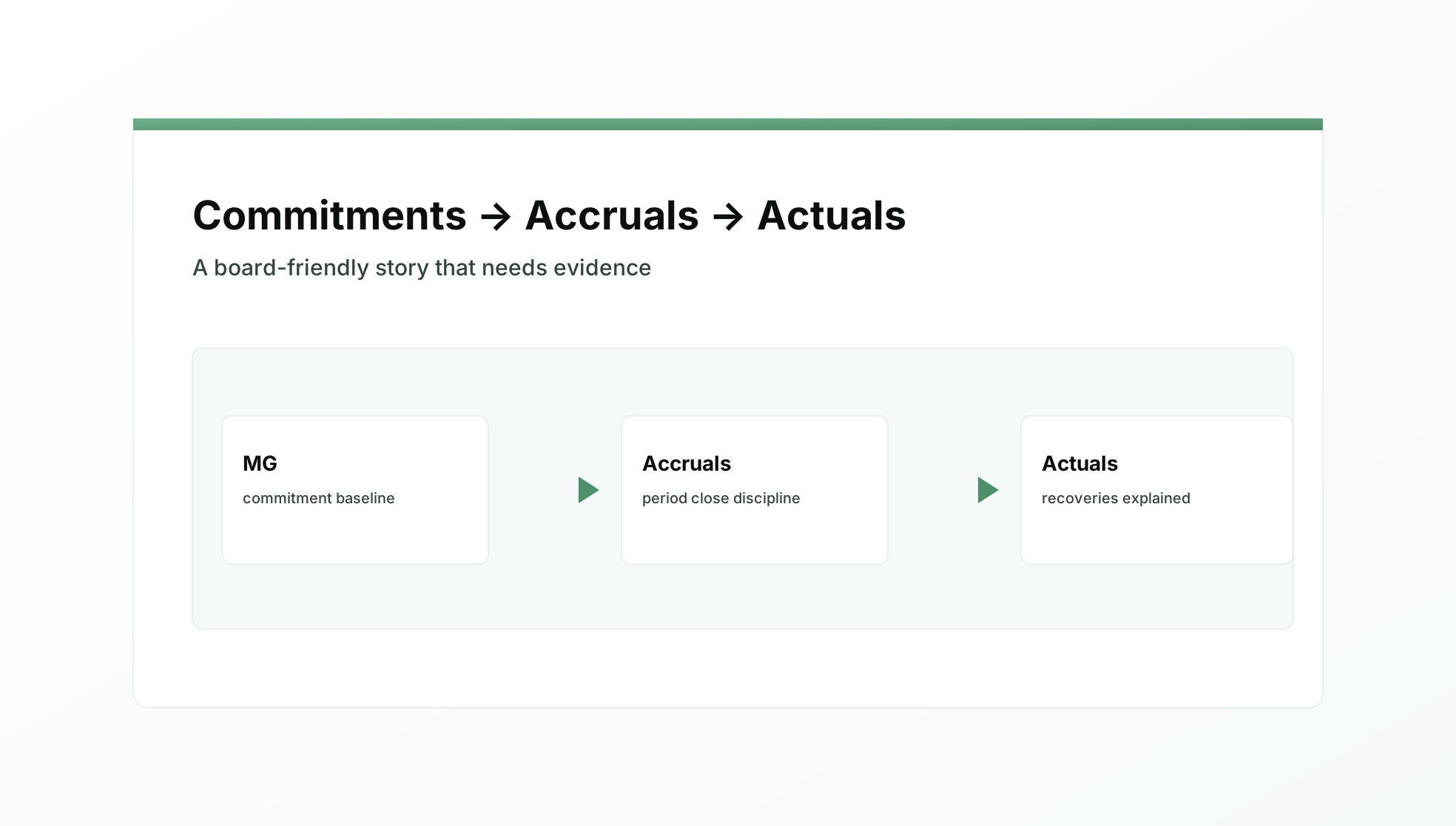
Minimum guarantees, advances, and commitments introduce a CFO-grade question: what is our exposure and what is the path to recovery? If your platform cannot support that narrative with evidence, the business will fall back to bespoke models and manual reconciliations.
- • Forecasting supports trust in the numbers.
- • Versioning matters: deals change, and your audit trail should show when and why.
- • Close discipline matters: month-end is where messy systems get exposed.
The three buyer risks the sales process must resolve
- • Exposure visibility: we cannot explain commitments versus recoveries
- • Change management: deals change and the model breaks or rewrites history
- • Audit and disputes: evidence is scattered and approvals are unclear
If your GTM messaging avoids these fears, buyers will assume you cannot handle them.
Evidence to use in the sales cycle
Avoid generic claims like “flexible modelling”. Show the day-to-day process a buyer recognises: deal setup, effective dates, changes, close, statement review, and audit evidence.
- • A demo that includes a change request will outsell a demo that assumes stable deals
- • One commitments-to-actuals view with drill-down will beat a dashboard wall
- • A clear close checklist will reduce implementation fear
A bounded first commercial scope
A safe first step is a commitments-to-actuals sprint. You prove the story finance cares about, with evidence.
- • Input: 1 rights package, 1 set of commitments, 1 reporting cycle
- • Output: commitments waterfall, versioning story, and drill-down evidence
- • Acceptance tests: buyer signs off on how changes and approvals are represented
Qualify commercial exposure as a buying signal
- • Tie the signal to a contract, forecast, rights-window, recovery, or reporting change with a known date
- • Show the exposure owner how the change affects commitments, cash, close, or audit evidence
- • Use the agent to assemble the evidence and prepare the scenario; keep the decision with finance or rights leadership
- • Measure whether the proof advances an agreed buying decision rather than only generating engagement
Related service
Related insights
GTM Signals
Event-to-Pipeline: Convert Valid Signals into Accepted Sales Actions
A signal-led event system for capturing buying context, using agents to prepare evidence-based follow-up, and measuring accepted pipeline conversion.
GTM Signals
Pipeline Discipline: Stage Evidence That Supports Commercial Decisions
Define opportunity stages by buyer evidence, ownership, and the next decision so forecasts, resource choices, and conversion analysis remain credible.
GTM Signals
Agent-Assisted Outreach: Evidence, Approval, and Measured Follow-Through
Combine experienced GTM judgement with AI agents that accelerate signal monitoring, source evidence, account research, and action preparation while people retain commercial and relationship accountability.
Get Procurement Signals | GTM Signals
A lightweight quarterly note with practical playbooks and patterns. No spam.
Procurement Signals | GTM Signals
Practical patterns for procurement delivery, agentic systems, and GTM execution.