Switching Triggers: Evidence That an Account Has a Reason to Change
Identify observable commercial, operational, control, and technology changes that create a decision window for IP and royalties software buyers.
Trust failures trigger software switching
Separate evidence of change from a plausible sales story
A trigger is useful only when it creates a material constraint, reaches an accountable buyer and has a decision horizon.
- 01 · SignalDetect
Observe a time-bound change or behaviour
- 02 · EvidenceVerify
Confirm source, recency and account relevance
- 03 · ContextQualify
Map the buying constraint, role and timing
- 04 · Agent workPrepare
Assemble research, proof and a proposed action
- 05 · GateApprove & learn
Owner approves; CRM records the result
- Weak starting point
- Outreach leads with platform capability and assumes scale creates urgency.
- Commercial decision
- Confirm the dispute pattern, business impact and owner before selecting reconciliation proof.
- Acceptance evidence
- Discovery validates or rejects the trigger and records the outcome for future account scoring.
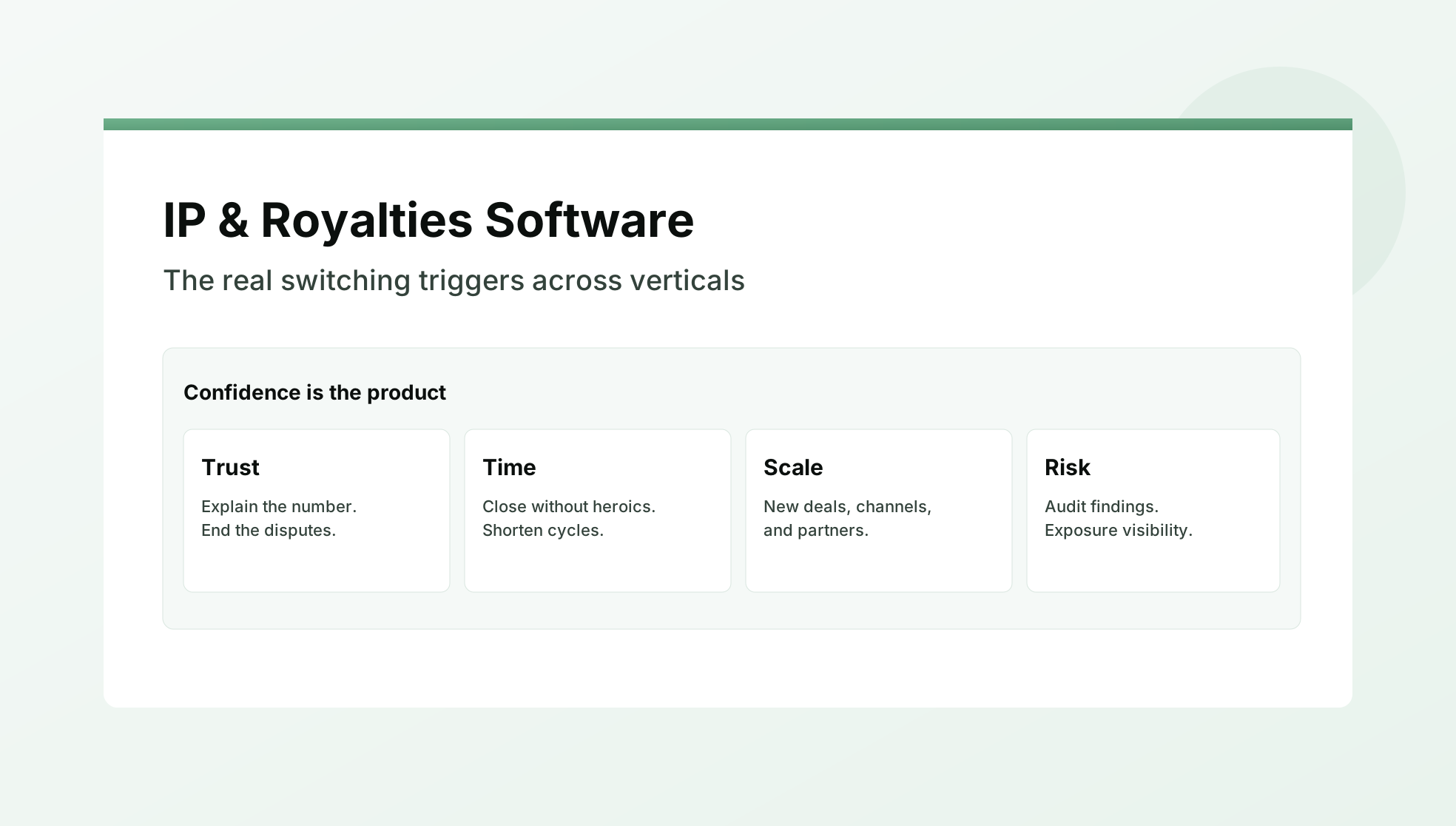
Most IP and royalty platforms are bought for compliance, reporting, or “visibility”. Switching decisions arise from trust breakdown, operational drag, and the sense that the system cannot keep up with reality.
Platform value depends on confidence in the numbers. Finance, operations, and auditors need one traceable version of the calculation and its evidence.
What buyers are really trying to avoid
The buying risk is operational and visible: late or disputed statements, an unstable close, or an audit question without a timely answer. Positioning should connect platform evidence to those consequences.
The four switching triggers you can build a GTM around
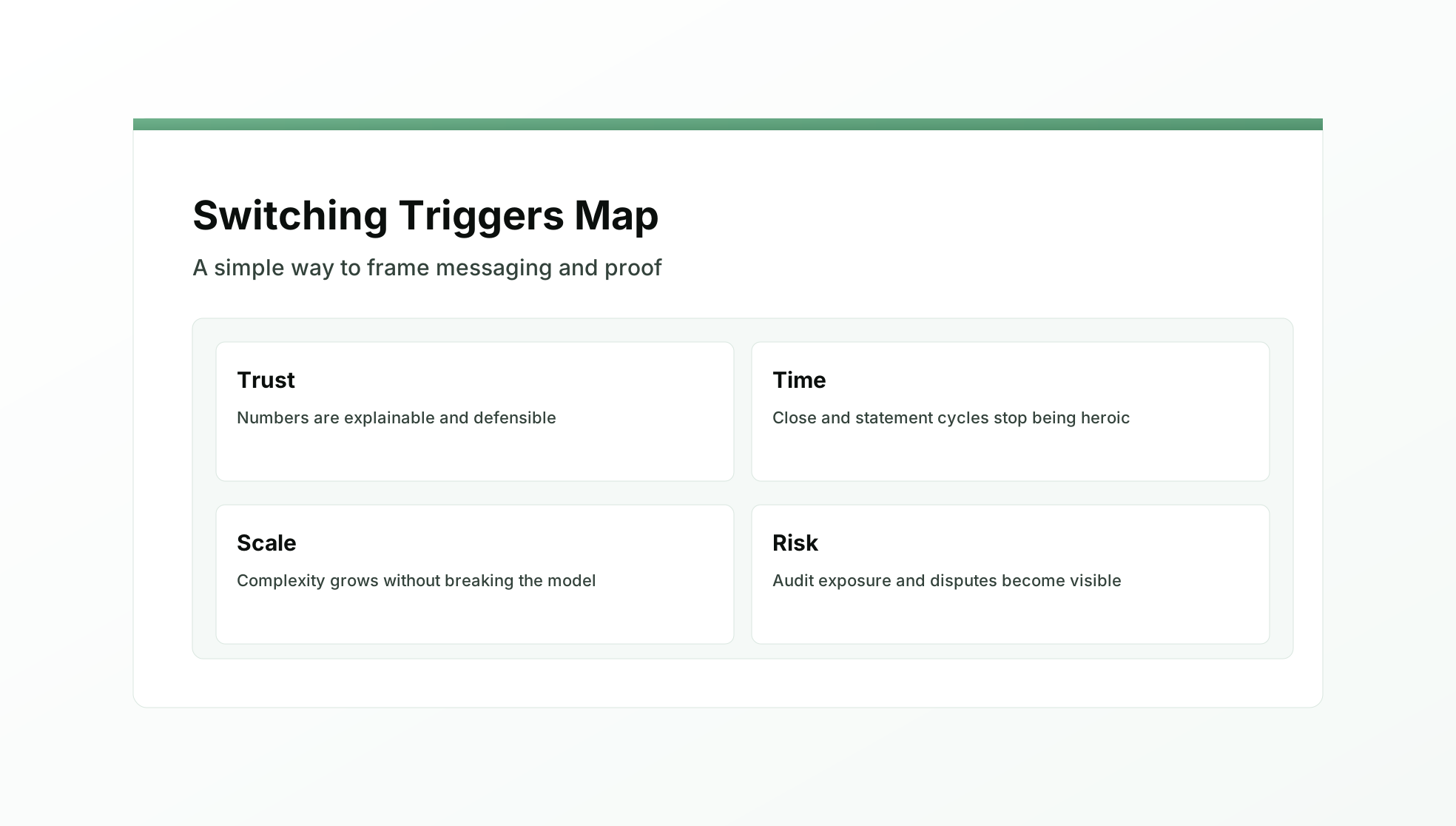
1) Trust breaks (reconciliation never ends)
When statements do not match source data, the team spends cycles explaining instead of improving. Buyers describe the result plainly: “we do not trust the numbers”.
2) Time-to-close expands (finance calendar pain)
Royalty cycles collide with month-end, quarter-end, and partner reporting. If the process becomes heroic every period, the system is failing the business.
3) Complexity grows faster than the system
New deals, new channels, new territories, new partners, new product lines. A platform that was fine for one business model collapses under the second.
4) Risk exposure becomes visible
Audit findings, partner disputes, leakage, and contract non-compliance become board questions.
Discovery questions that validate the trigger
A good discovery call finds the trigger fast, then ties it to a concrete next step. These questions work because they respect the buyer’s calendar and the buyer’s fear.
Trust
- • Where do disputes start: ingestion, matching, rules, or approvals?
- • How do you explain a single statement line to a sceptical partner?
- • What is the most common “we do not trust this” scenario?
Time and close pain
- • Which part of the cycle becomes heroic: ingestion, reconciliation, approvals, or reporting?
- • What happens when data arrives late or incomplete?
- • Who is pulled into the process at period end, and why?
Scale and complexity
- • What new deal type or channel broke the model most recently?
- • How do you handle changes in effective dates and rule versions?
- • Where do people fall back to spreadsheets, and for what reason?
How the triggers look by vertical (and how to speak to them)
Brand licensing & merchandise
Buyers care about complex deal terms becoming operational: minimum guarantees, sell-off windows, territories, product categories, and deductions. Win trust by showing how those terms are operationalised and evidenced.
Music & publishing royalties
Buyers care about ingestion, matching, and transparent calculations. The “why” behind a number matters as much as the number. Transparency sells.
Media, sport, and content rights
Buyers care about forecasting against commitments, rights windows, and multi-party deals. The platform needs to handle change without rewriting the whole model.
- • Lead with the buyer’s calendar pain: close, statements, and disputes
- • Show one hard thing done well: explainability, traceability, and operational controls
- • Package offers as outcomes: restore trust, reduce disputes, scale complexity safely
Proof assets that buyers believe (because they match reality)
Demonstrate one hard problem end to end
Pick one scenario that buyers recognise and make it the centre of your demo. For royalties, that is usually: explain a number, handle an exception, show change under versioning, or show an audit trail.
Provide an evidence pack
- • A sample statement line with drill-down to rule and source record
- • A reconciliation storyboard (what changed, why, and who approved)
- • An exceptions queue with ownership, SLA, and resolution evidence
Implementation safety offer
A buyer is more likely to move when the first step is small and safe. A short sprint to prove lineage, terms-to-ops, or close readiness is easier to buy than a full replacement.
A 90-day GTM execution plan
- • Weeks 1–2: pick one vertical wedge and one dominant trigger; write the narrative in plain language
- • Weeks 3–4: build one proof asset and one demo spine around the hard scenario
- • Weeks 5–8: run one motion (events or outbound) with strict follow-up SLAs and pipeline hygiene
- • Weeks 9–12: iterate based on replies and conversions; update the narrative library
A focused GTM pattern for niche markets
Niche markets punish generic marketing. Choose one vertical wedge, one dominant trigger, and one proof asset you can repeat.
- • One vertical: choose the segment where you have the strongest proof and cleanest ICP
- • One trigger: anchor your narrative in the operational pain that forces change
- • One repeatable offer: reconciliation reset or terms-to-ops sprint
- • One cadence: events plus disciplined follow-up, with pipeline hygiene and learning loops
Test the message for market specificity
A message that could fit any software category is too broad. Name the vertical, the trigger, and the evidence.
Test a switching trigger before building a campaign
- • Can the underlying change be attributed to a reliable source and a relevant time period?
- • Which business or financial consequence does it create, and who owns that consequence?
- • What evidence would prove that the current approach is no longer acceptable?
- • Which next decision can your proof help the buyer make, and how will the result be recorded?
Related service
Related insights
GTM Signals
Event-to-Pipeline: Convert Valid Signals into Accepted Sales Actions
A signal-led event system for capturing buying context, using agents to prepare evidence-based follow-up, and measuring accepted pipeline conversion.
GTM Signals
Pipeline Discipline: Stage Evidence That Supports Commercial Decisions
Define opportunity stages by buyer evidence, ownership, and the next decision so forecasts, resource choices, and conversion analysis remain credible.
GTM Signals
Agent-Assisted Outreach: Evidence, Approval, and Measured Follow-Through
Combine experienced GTM judgement with AI agents that accelerate signal monitoring, source evidence, account research, and action preparation while people retain commercial and relationship accountability.
Get Procurement Signals | GTM Signals
A lightweight quarterly note with practical playbooks and patterns. No spam.
Procurement Signals | GTM Signals
Practical patterns for procurement delivery, agentic systems, and GTM execution.