Signal-Led GTM for IP & Royalties Software Providers
An execution model for niche B2B software: valid signals, agent-assisted research, proof by buying constraint, human approval, and pipeline learning.
Qualified evidence compounds in niche software markets
Make every commercial action improve the next decision
The GTM process links source records, agent preparation, owner approval and conversion results in one learning loop.
- 01 · SignalDetect
Observe a time-bound change or behaviour
- 02 · EvidenceVerify
Confirm source, recency and account relevance
- 03 · ContextQualify
Map the buying constraint, role and timing
- 04 · Agent workPrepare
Assemble research, proof and a proposed action
- 05 · GateApprove & learn
Owner approves; CRM records the result
- Weak starting point
- Campaign activity is reviewed by volume, with no comparison of signal quality or opportunity progression.
- Commercial decision
- Run one signal hypothesis by segment and compare acceptance, meetings and pipeline movement.
- Acceptance evidence
- Investment shifts toward signal types and proof assets with stronger qualified conversion.
Each decision narrows the next, so execution scales around a coherent market choice.
- 01Market choice
Where to compete
Category, vertical wedge, geography, customer maturity and competitive field.
Decision outputPriority market thesis - 02Buyer system
Who must decide
ICP economics, buying committee, buyer problem, sponsor and control owner.
Decision outputICP and buying map - 03Position and offer
Why buyers should change
Differentiated position, entry offer, proof and the decision it should advance.
Decision outputPositioning architecture - 04Route to market
How demand becomes a sale
The role of outbound, events, content, partners and sales by priority segment.
Decision outputCommercial motion - 05Economics and capacity
What the motion can support
ACV, sales cycle, conversion, coverage and delivery capacity using the client baseline.
Decision outputInvestment assumptions - 06Management system
What leaders inspect
Stage evidence, decision age, pipeline quality and the choices each measure should trigger.
Decision outputManagement rhythm
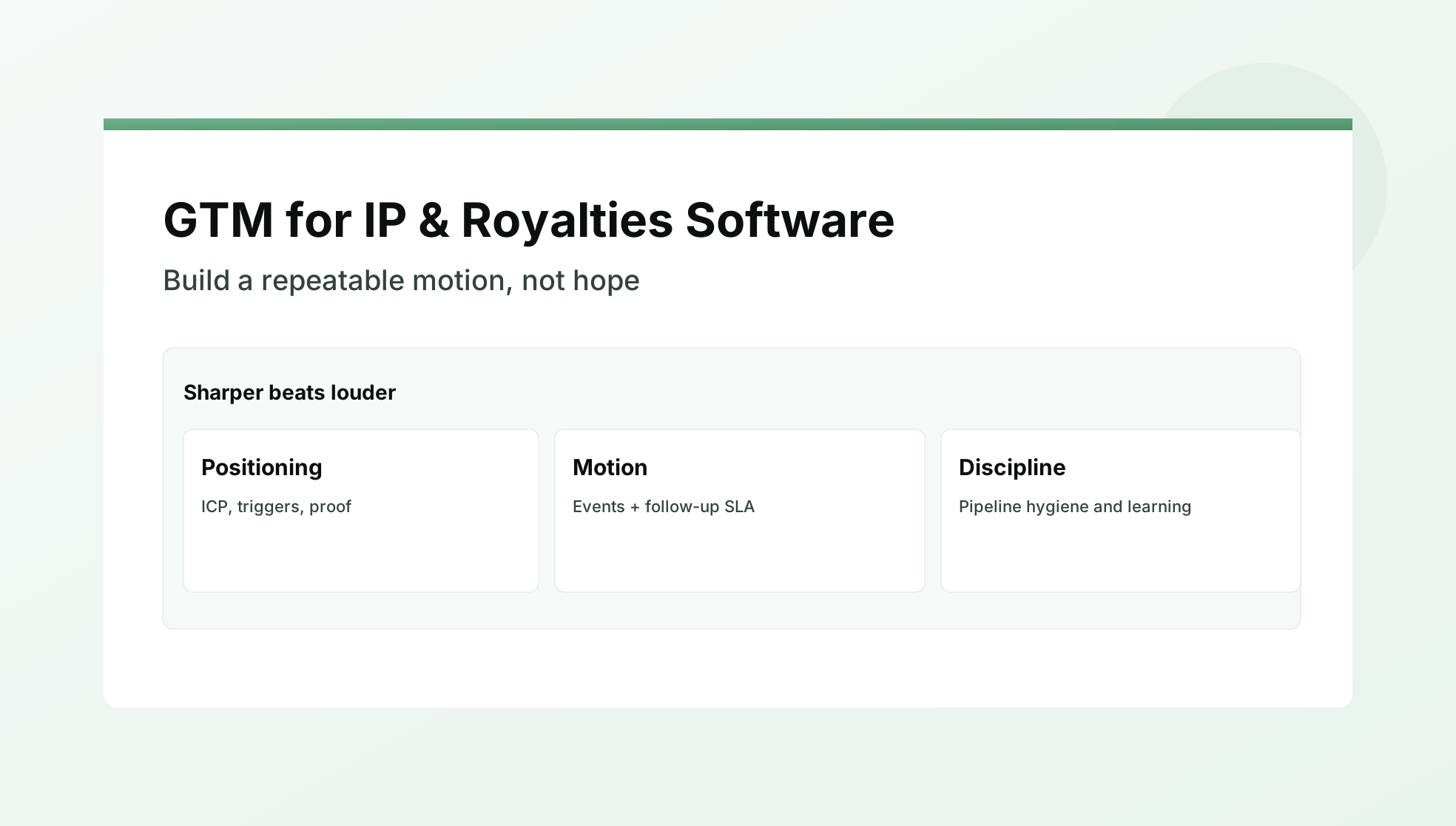
In the narrow market for IP licensing and royalty platforms, a repeatable motion that compounds learning matters more than broad awareness.
Narrow markets reward evidence and repetition. Select a small number of signal hypotheses and execute them consistently enough to compare qualified conversion.
What “repeatable” really means
It means you can explain your motion on one page: target list, trigger, offer, follow-up SLA, stage definitions, and a weekly cadence that improves the system.
Agree the strategic choices before building the motion
TraDuotech brings market, positioning and execution experience, but the commercial system is agreed with the customer. Leadership needs to choose the market wedge, buyer system, entry offer, proof burden, route to market and investment assumptions before teams scale activity.
- • Market thesis: which segment has a costly problem, a credible reason to change and a buying route the company can serve
- • Buying system: sponsor, economic buyer, operational user, control roles and the decision each must make
- • Position and proof: the differentiated claim, evidence required and a low-risk commercial entry point
- • Route and capacity: which mix of outbound, events, partners, content and sales fits the customer economics
- • Management system: the evidence that triggers further investment, adaptation or a stop decision
Build the execution system through assessment, sprint, and review
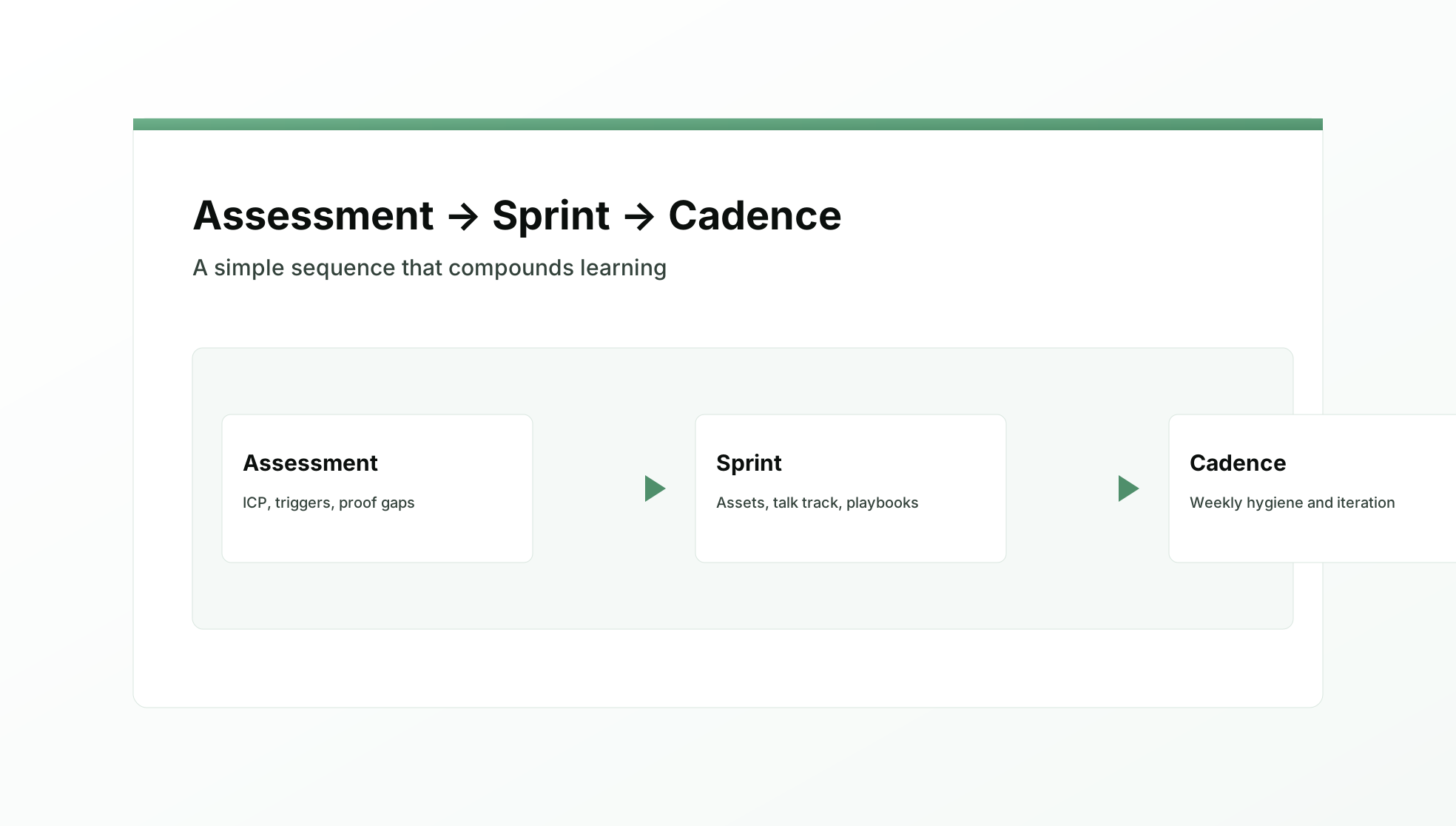
- • Assessment: ICP, triggers, narrative, and proof gaps
- • Sprint: ship the core assets (one-pager, talk track, demo spine, sequences, event playbook)
- • Cadence: weekly pipeline review with stage definitions and next-step discipline
Decision outputs from the assessment
- • One chosen vertical wedge and the switching trigger you lead with
- • The buyer roles and the three questions they ask in every deal
- • The proof asset you will use repeatedly (demo moment or evidence pack)
What to build (and what to stop building)
Build
- • A vertical one-pager per wedge (brand licensing, merchandise, music, media) with one trigger and one proof point
- • A demo spine that includes change, audit questions, and evidence moments
- • An event-to-pipeline playbook with follow-up SLAs and lead acceptance rules
- • Enablement that helps reps run a strong discovery and use the pitch deck well
Stop
- • Generic thought leadership that could apply to any SaaS category
- • Campaigns without a clear follow-up SLA and ownership
- • Pipeline without definitions, next steps, and decision-maker visibility
Test whether the offer is specific
If you cannot state your offer in one sentence without using the words “platform” or “solution”, buyers will struggle to understand why they should act.
The weekly execution cadence (agenda)
Use the cadence to turn strategy into weekly decisions. Keep it short, consistent, and focused on learning.
- • 10 minutes: pipeline hygiene (next step, date, owner, stage criteria)
- • 10 minutes: follow-up SLA review (where did we slow down and why)
- • 10 minutes: learning loop (what message or demo moment converted, what did not)
- • Decision: one change to test next week (message, segment, offer, or sequence)
KPIs that matter (and what they should trigger)
- • Follow-up SLA adherence (process predicts outcome)
- • Second conversation rate (signal that positioning and discovery are working)
- • Stage conversion rate by trigger (so you learn what actually converts)
- • Pipeline hygiene completeness (owner + next step + date)
Where agents reduce commercial preparation cost
Use agents to monitor approved sources, assemble evidence, map roles, and prepare the next action. A named owner verifies the claims, buying context, route, and relationship decision before external action.
- • Research: build account briefs that inform discovery
- • Drafting: create first-pass sequences and event follow-up messages
- • Consistency: keep a shared narrative library and update it based on what converts
Guardrail
Agent output must pass an evidence, relevance, relationship, and approval check. Record edits and rejections so the signal and preparation rules improve.
Build team capability alongside the agent-assisted system
Configure, train and transfer with the team that will operate it.
We bring GTM and implementation experience, then agree the choices, controls and measures with the customer. AI reduces research, preparation and administration time; people retain market, qualification, conversation and relationship decisions.
- 01Commercial design
Agree the commercial rules
Agree how the GTM strategy translates into qualification, evidence, approval, escalation and CRM requirements.
Working ownershipTraDuotech + GTM leadership - 02Agent configuration
Adapt the chosen GTM stack
Configure and integrate Hermes, Claude, or another established AI tool or agent platform against the agreed GTM rules.
Working ownershipTraDuotech + RevOps / technology - 03SDR enablement
Train the team to apply judgement
Coach SDRs on evidence review, discovery, qualification, objections, exceptions and accountable use.
Working ownershipTraDuotech + sales management - 04Capability transfer
Leave a system the team can run
Hand over playbooks, controls, QA measures, coaching routines and an improvement backlog.
Working ownershipNamed customer owner
Approved-source monitoring, evidence assembly, preparation and GTM administration.
Strategy, claims, qualification, live conversation, commercial judgement and relationships.
Acceptance, conversion, decision age, exceptions and coaching needs by cohort.
Configure an established GTM agent or the customer's selected platform around agreed commercial rules, train SDRs and sellers to apply judgement, and give management the performance data needed to coach the team and improve the GTM process.
The management system behind a repeatable motion
- • Set a small number of signal hypotheses for each ICP wedge and publish the evidence required to qualify them
- • Use agents to monitor, correlate, and prepare work across approved sources; retain named approval for external action
- • Inspect signal acceptance, qualified conversion, decision age, and loss reason by cohort every week
- • Retire weak signals and proof assets, strengthen the plays that advance buyer decisions, and keep the CRM as the evidence record
Related service
Related insights
GTM Signals
Event-to-Pipeline: Convert Valid Signals into Accepted Sales Actions
A signal-led event system for capturing buying context, using agents to prepare evidence-based follow-up, and measuring accepted pipeline conversion.
GTM Signals
Pipeline Discipline: Stage Evidence That Supports Commercial Decisions
Define opportunity stages by buyer evidence, ownership, and the next decision so forecasts, resource choices, and conversion analysis remain credible.
GTM Signals
Agent-Assisted Outreach: Evidence, Approval, and Measured Follow-Through
Combine experienced GTM judgement with AI agents that accelerate signal monitoring, source evidence, account research, and action preparation while people retain commercial and relationship accountability.
Get Procurement Signals | GTM Signals
A lightweight quarterly note with practical playbooks and patterns. No spam.
Procurement Signals | GTM Signals
Practical patterns for procurement delivery, agentic systems, and GTM execution.