Brand Licensing & Merchandise: Manage Contract Obligations Across Rights and Royalties
A GTM point of view for licensing platforms that connects rights, approvals, royalties, and exceptions to the day-to-day decisions buyers make.
Contracts fail when negotiated terms reach operational handover
Lead with the buyer's process problem
Contract terms become commercially useful signals when they expose recurring approval, data or settlement failures.
- 01 · SignalDetect
Observe a time-bound change or behaviour
- 02 · EvidenceVerify
Confirm source, recency and account relevance
- 03 · ContextQualify
Map the buying constraint, role and timing
- 04 · Agent workPrepare
Assemble research, proof and a proposed action
- 05 · GateApprove & learn
Owner approves; CRM records the result
- Weak starting point
- The sales story starts with generic contract automation.
- Commercial decision
- Ground the account hypothesis in approval delay, rights evidence and missed launch timing.
- Acceptance evidence
- The proof shows the affected term, operational decision, owner and measurable cycle-time result.
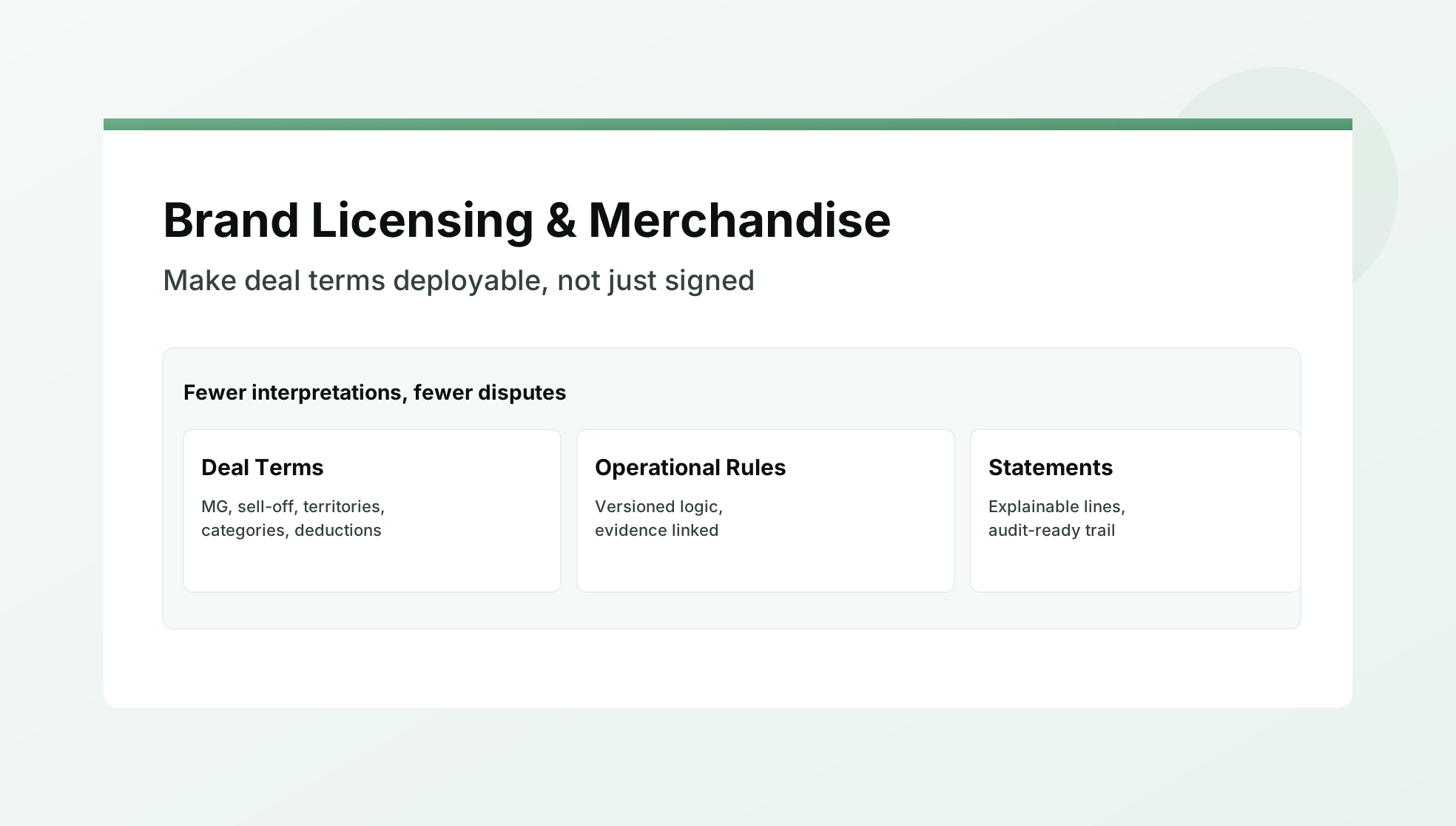
In brand licensing and merchandising, the harder work is making negotiated terms runnable: deductions, returns, sell-off windows, category definitions, territory rules, and audit rights.
Broad configuration claims do not resolve licensing risk. Buyers need contract language translated into operational rules with evidence and ownership.
The buyer decision
Failing to operationalise terms creates a parallel process and reduces the platform to a reporting layer instead of a system of record.
Where deals break (and how to turn it into messaging)
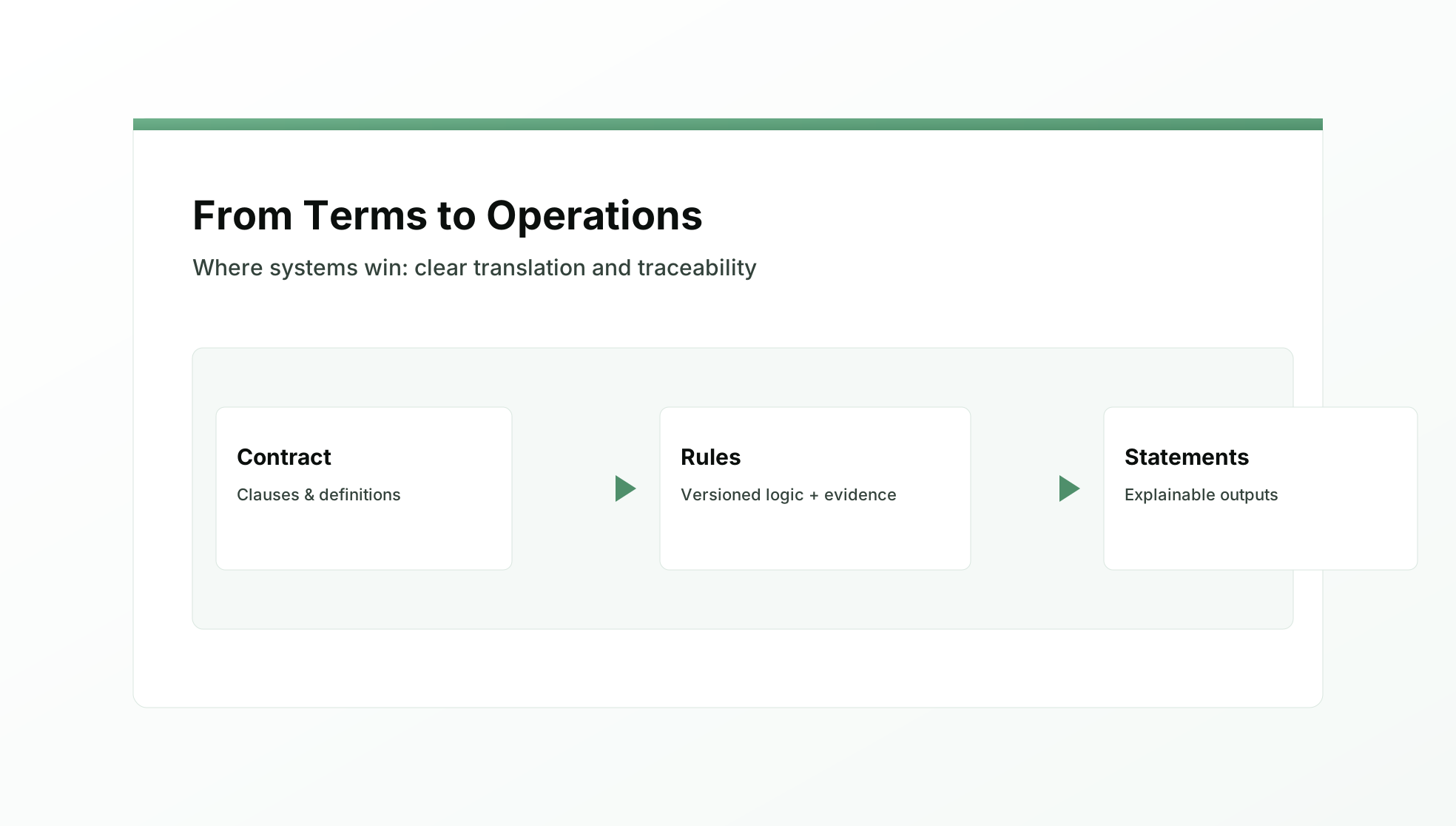
- • Term ambiguity: “net sales” and deductions defined differently across partners and time
- • Data friction: channel data arrives late, incomplete, or with inconsistent mappings
- • Manual exceptions: spreadsheets become the real system of record
- • Disputes: partners challenge calculations and evidence is scattered
- • Forecasting: minimum guarantees, advances, and accruals become hard to explain
A strong GTM angle is to show how you reduce dispute cycles by design: clear rule definitions, versioned logic, and audit-ready evidence links.
The terms-to-operations evidence checklist
Buyers have heard “flexible” too many times. A better message is: we can make your most complex deal deployable. This is what they look for.
- • Effective dates and rule versioning (changes do not overwrite history)
- • Clear definitions for deductions and returns (with audit trail)
- • Territory and product-category logic that is testable
- • Minimum guarantees with visible recovery logic and approvals
- • A dispute workflow: what evidence is packaged, who decides, how it closes
A decision-linked value model
Decision makers rarely buy “better reporting”. They buy time, trust, and reduced exposure. Your narrative should reflect that.
- • Time: faster close and fewer manual cycles each reporting period
- • Trust: statements that can be explained and defended
- • Risk: fewer audit findings and fewer partner escalations
- • Growth: ability to launch new categories and partners without rewriting the model
A licensing demo built around acceptance evidence
A good demo follows a story buyers recognise. Here is a structure you can repeat.
- • Set up: one complex deal with clear terms and definitions
- • Run: show how terms become rules and how exceptions are handled
- • Explain: drill from a statement line to the rule and the source record
- • Change: introduce a mid-term change and show versioning
- • Defend: show the evidence pack an auditor or partner would accept
Proof assets that work for brand licensing buyers
Show one complex deal end-to-end
Pick an example with category rules, territories, deductions, and minimum guarantees. Show how the platform turns it into rules and how an auditor would review it.
Demonstrate explainability
A buyer should be able to click from a statement line to the calculation and the source record. That is a credibility multiplier.
Make implementation feel safe
A short “terms-to-ops” sprint is easier to buy than a full platform change. Use it as a wedge offer.
Make the sprint concrete
- • Input: 1–2 contracts, 1 partner feed, 1 reporting cycle
- • Output: rules implemented, a statement generated, and an evidence pack
- • Acceptance tests: the buyer agrees “this is correct” before you scale
Turn domain evidence into a qualified GTM signal
- • Look for time-bound changes in catalogue, territory, channel, approval volume, product launches, or settlement workload
- • Verify the business consequence before presenting workflow capability as the answer
- • Map proof to the owner of launch timing, rights control, royalty accuracy, or audit evidence
- • Use one representative exception to demonstrate the decision path and acceptance measure
Related service
Related insights
GTM Signals
Event-to-Pipeline: Convert Valid Signals into Accepted Sales Actions
A signal-led event system for capturing buying context, using agents to prepare evidence-based follow-up, and measuring accepted pipeline conversion.
GTM Signals
Pipeline Discipline: Stage Evidence That Supports Commercial Decisions
Define opportunity stages by buyer evidence, ownership, and the next decision so forecasts, resource choices, and conversion analysis remain credible.
GTM Signals
Agent-Assisted Outreach: Evidence, Approval, and Measured Follow-Through
Combine experienced GTM judgement with AI agents that accelerate signal monitoring, source evidence, account research, and action preparation while people retain commercial and relationship accountability.
Get Procurement Signals | GTM Signals
A lightweight quarterly note with practical playbooks and patterns. No spam.
Procurement Signals | GTM Signals
Practical patterns for procurement delivery, agentic systems, and GTM execution.